Skip to page content

Meet Viking 1

Every part, up close

Turn it, pick a part to see what it did, pull the parts apart, or download it to print your own.

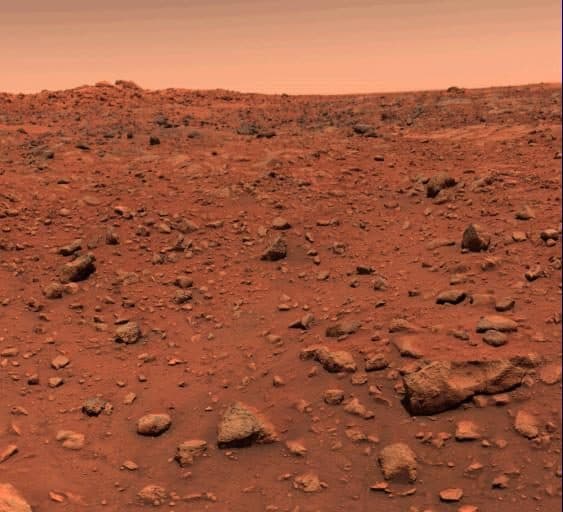
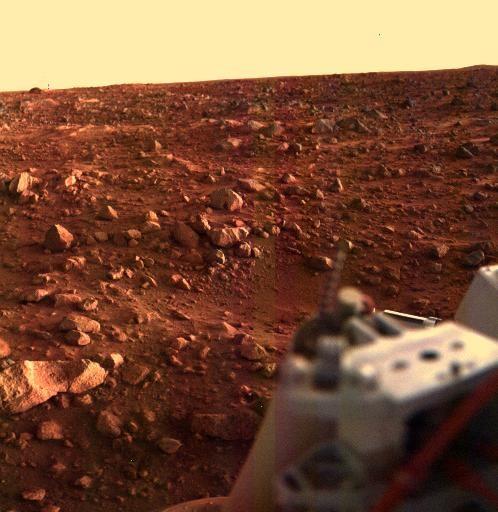
First Color Image From Viking Lander 1
Drag to turn · pinch or scroll to zoom

Parts

Download

Viking 1 and Viking 2 landed identical landers. Model: Viking Lander, NASA 3D Resources. The STL is exported from it for printing; most printers will need supports.

The film · 9 scenes

The first machine to touch down on Mars, survive, and send pictures back to Earth. It stood on the Golden Plain for six years, testing for life.

From why it was built to its last signal, told in real NASA photographs. Scroll through it, or press play.

Watch the film

Looking for life

Viking's landers carried a biology laboratory. Here is what happened when Viking 1 tested the soil.

  1. 1

    28 July 1976

    The robot arm scoops the first soil sample into the biology lab.

  2. 2

    Four samples

    Taken together, the results could have been read as a weak positive sign of life.

  3. 3

    Organics

    But the gas chromatograph mass spectrometer found no organic compounds.

  4. 4

    Verdict

    Inconclusive. Mars missions since have kept asking the question Viking began.

Interactive Mission Simulation

Viking Biology: The 1976 Life Detection Lab

Run the Pyrolytic Release, Labeled Release, and Gas Exchange experiments on Chryse Planitia soil.

Play Simulation

Born on Earth

Launch

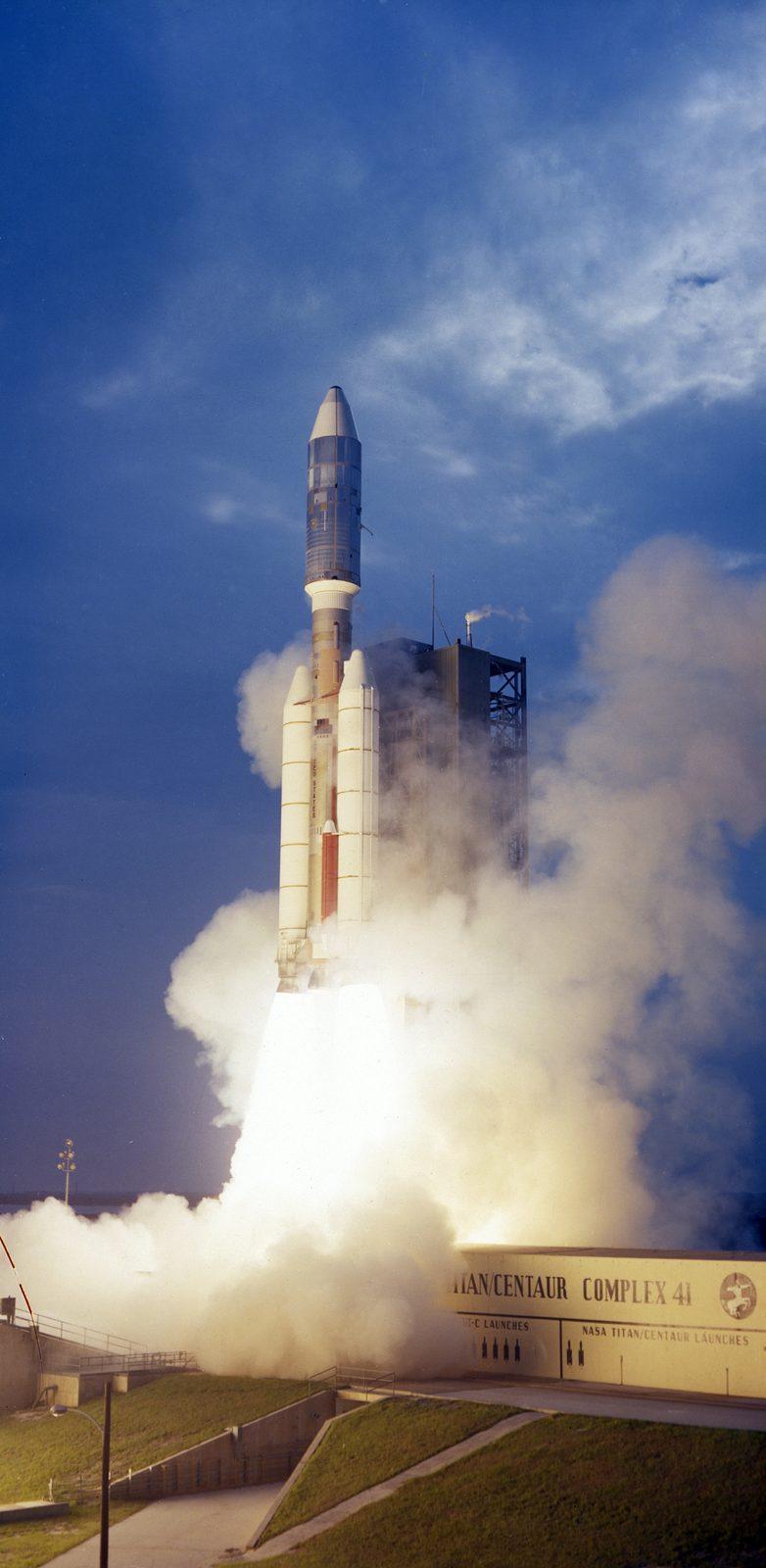
The Titan III-Centaur carrying the Viking 1 Lander lifted off on August 20, 1975.
Viking 1 lifts off on a Titan III-Centaur, 20 August 1975 · NASA/MSFC

20 August 1975
Titan IIIE-Centaur · Launch Complex 41

Built by Martin Marietta.

Arrival on Mars

Landing

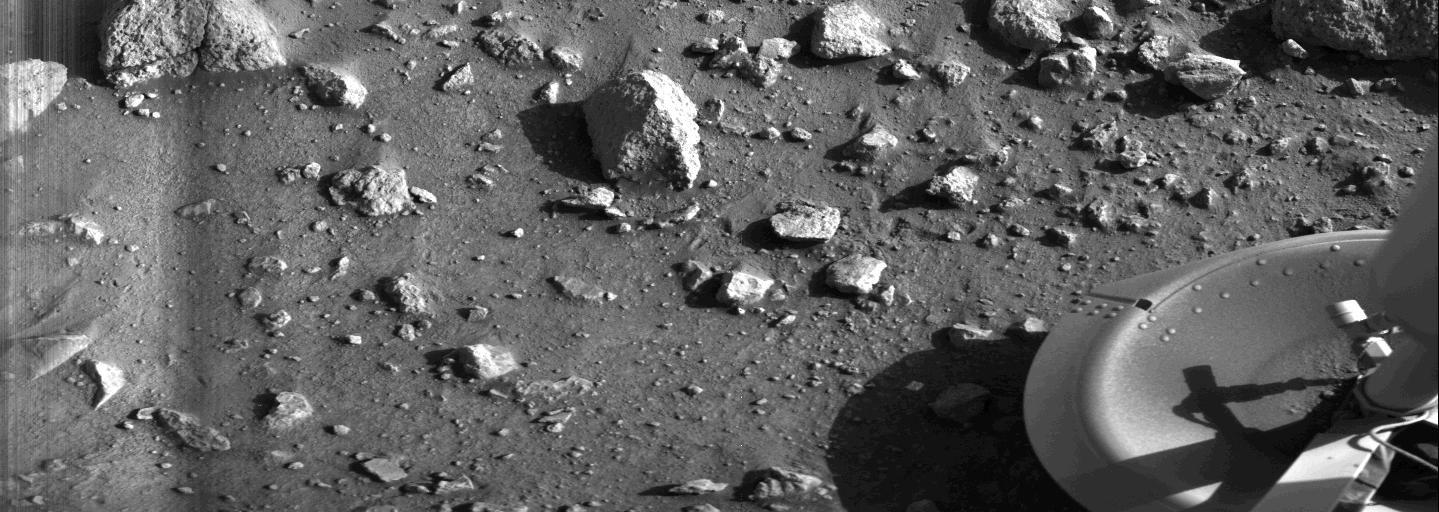
This is the first photograph ever taken on the surface of the planet Mars.
First Photograph Taken On Mars Surface · NASA/JPL

20 July 1976
Chryse Planitia · Parachute and retro-rockets

Life’s work

They went where we couldn’t.

  1. KENNEDY SPACE CENTER, FLA.No. 01

    Sealed for the trip

    1975

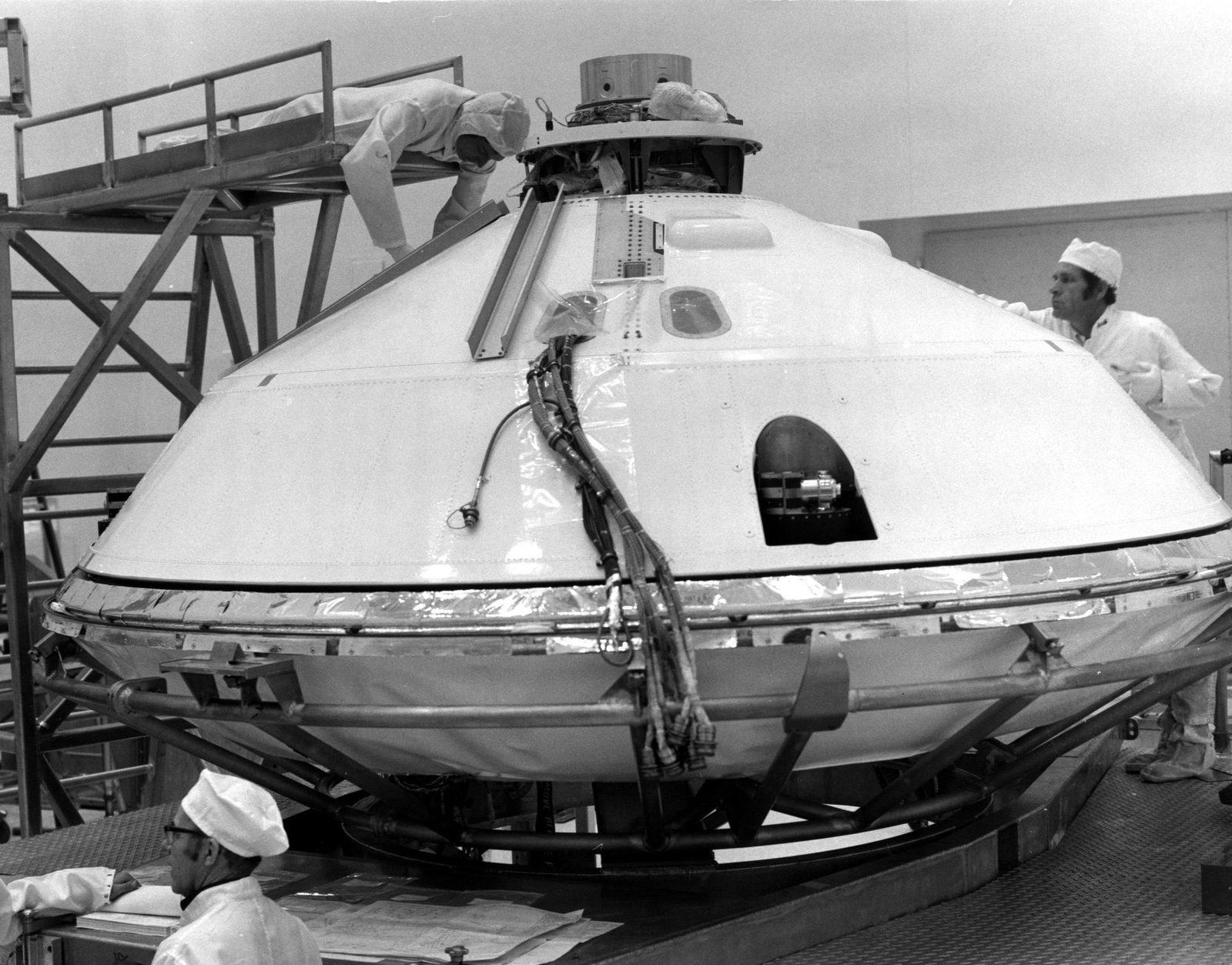
    At Kennedy Space Center, technicians prepared Viking Lander 1's aeroshell cover.

  2. The Titan III-Centaur carrying the Viking 1 Lander lifted off on August 20, 1975.No. 02

    Liftoff

    20 August 1975

    A Titan III-Centaur launched Viking 1 from Launch Complex 41.

  3. This is the first photograph ever taken on the surface of the planet Mars.No. 03

    First picture

    20 July 1976

    Minutes after landing it took the first photograph ever made on the surface of Mars.

  4. First Color Image From Viking Lander 1No. 04

    In colour

    1976

    The first colour image from the lander showed the rocky orange plain of Chryse Planitia.

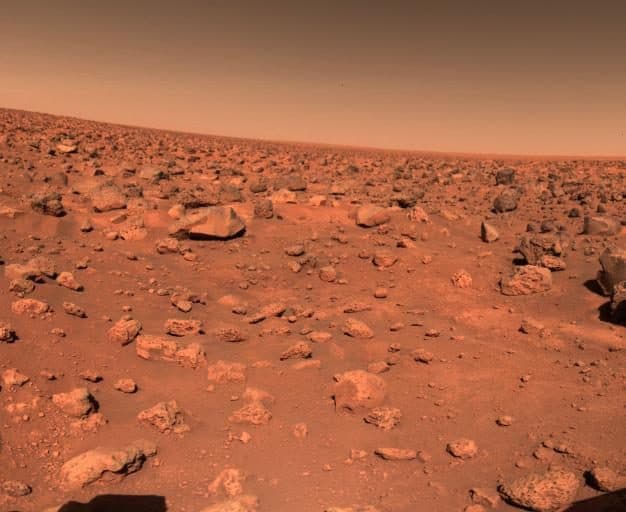
  5. Sunset at the Viking Lander 1 SiteNo. 05

    Looking for life

    28 July 1976

    Its robot arm scooped the first soil samples into the biology laboratory. The results were inconclusive.

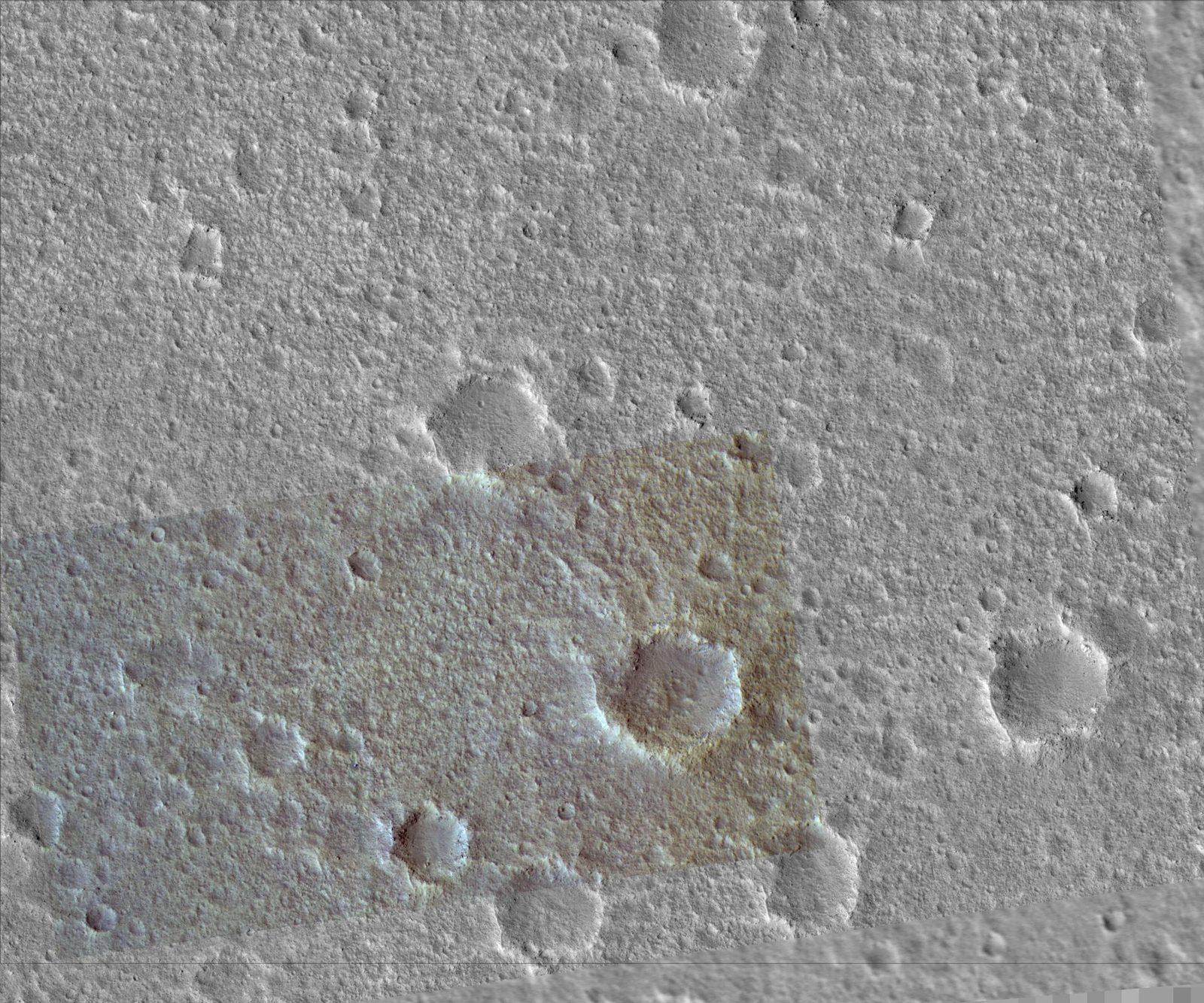
  6. Viking Lander 1 Thomas A.No. 06

    Seen from orbit

    2006

    The lander, renamed the Thomas Mutch Memorial Station in 1982, was imaged from orbit by HiRISE.

A command from Earth cut the link

Last signal

11.11.1982

After more than six years on Mars, a faulty command sent from Earth cut the link. Viking 1 was never heard from again.

Background: Sunset at the Viking Lander 1 site · NASA/JPL

The full story

Viking 1, from start to finish

Viking 1 made the first truly successful landing on Mars on 20 July 1976 and sent back the first pictures from the surface. Its lander worked for more than six years, until a faulty command from Earth cut the link in November 1982.

Why they were built

Viking was a pair of complex deep-space probes designed to reach Mars and look for evidence of life. Each spacecraft had two parts: an orbiter of 2,339 kg and a lander of 978 kg. The orbiters photographed the planet and relayed data; the landers carried cameras, a seismometer, a weather station, an X-ray fluorescence spectrometer, a gas chromatograph mass spectrometer and a biology laboratory fed by a robot arm.

Swapped before launch

Before launch, the batteries of the spacecraft meant to fly first were discharged, so NASA swapped it for the second one, which launched as Viking 1 on 20 August 1975. After three course corrections it entered Mars orbit on 19 June 1976.

Landing on the Golden Plain

Orbiter photos showed the planned site in Chryse was rougher than expected, so the lander was retargeted to the western slopes of Chryse Planitia, the Golden Plain. It separated at 08:32 UT on 20 July 1976, sampled the air on the way down, and set down at 11:53:06 UT at 22.483° N, 47.94° W, about 28 km from its target.

The Soviet Mars 3 lander had made a survivable landing in 1971, but contact was lost seconds after touchdown, so Viking 1's was the first truly successful landing.

Looking for life

The lander photographed its surroundings in three colours and took a 300-degree panorama of gently rolling plains. It measured temperatures from −86 °C before dawn to −33 °C in the afternoon. Its seismometer did not work.

On 28 July 1976 the robot arm scooped the first soil samples into the biology laboratory. The combined results from four samples could have been read as a weak positive sign of life, but the gas chromatograph found no organic compounds, a negative result.

Six years on Mars

The primary mission ended in November 1976, followed by extended and continuation missions. The lander kept sending daily, then weekly, weather reports. In January 1982 it was renamed the Thomas Mutch Memorial Station, after the leader of the Viking imaging team.

On 11 November 1982 a faulty command sent from Earth interrupted communications, and attempts to regain contact failed. Together the two Viking landers returned 4,500 photos of their landing sites, and the orbiters 52,663 images of Mars.
Fly along

Follow Viking 1's real path in NASA's Eyes on the Solar System, built from spacecraft navigation data.

NASA/JPL-Caltech · open full screen

Watch

Official films and footage from NASA, JPL and museum archives.

  • Viking 40th Anniversary

    NASA · watch on YouTube

  • NASA's video of the Viking Project, the First U.S. Mars Landing, 1976 | NASA Archives

    Cosmosphere · watch on YouTube

  • Animation depicting Viking 1's Mars landing and mission team reaction, July 20, 1976.

    Cosmosphere · watch on YouTube

In the news

Articles, image releases and history pieces from NASA.

Its twin

Viking 2

No. 06 · 1976–1980

Visit Viking 2

Tribute wall

Checking authentication…

Messages from explorers (0)

  • No messages yet. There’s room for your little thank-you.

The shared RoverVilla wall stays here on Earth. These messages are not transmitted to a spacecraft.

Explore further

Official mission pages, catalogues, photo archives and 3D files.

AI-narrated documentary

Viking 1: in its own words

Coming soonAI-made

Coming later

An AI-narrated documentary

We have not made it yet. When it is ready it will be told in the first person by an AI voice, built only from the mission records above, and clearly labelled as AI-made.

Sources

Resting on Mars. Photos are from NASA's public archives and credited individually; anything marked AI-generated is not a real photo. The 3D model is NASA's own. Videos play from their publishers' YouTube channels. NASA does not endorse this site.