Viking 1: the story
Viking 1
NASA Project Viking · 1975 – 1982
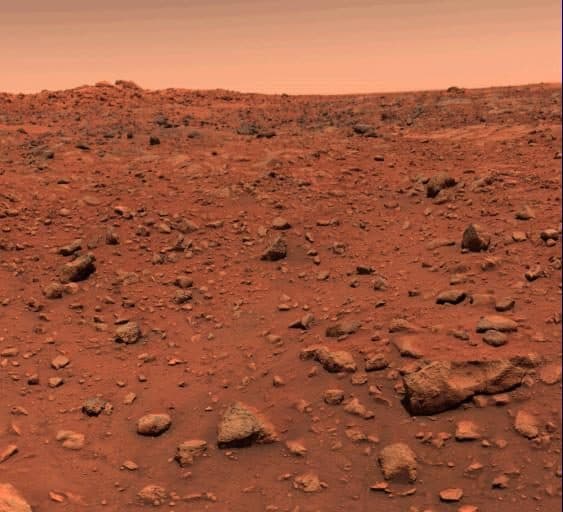
In July 1976, humanity landed on Mars. After four failures by previous missions, Viking 1 descended through thin Martian air and gently touched down on Chryse Planitia, opening a window onto an alien world.
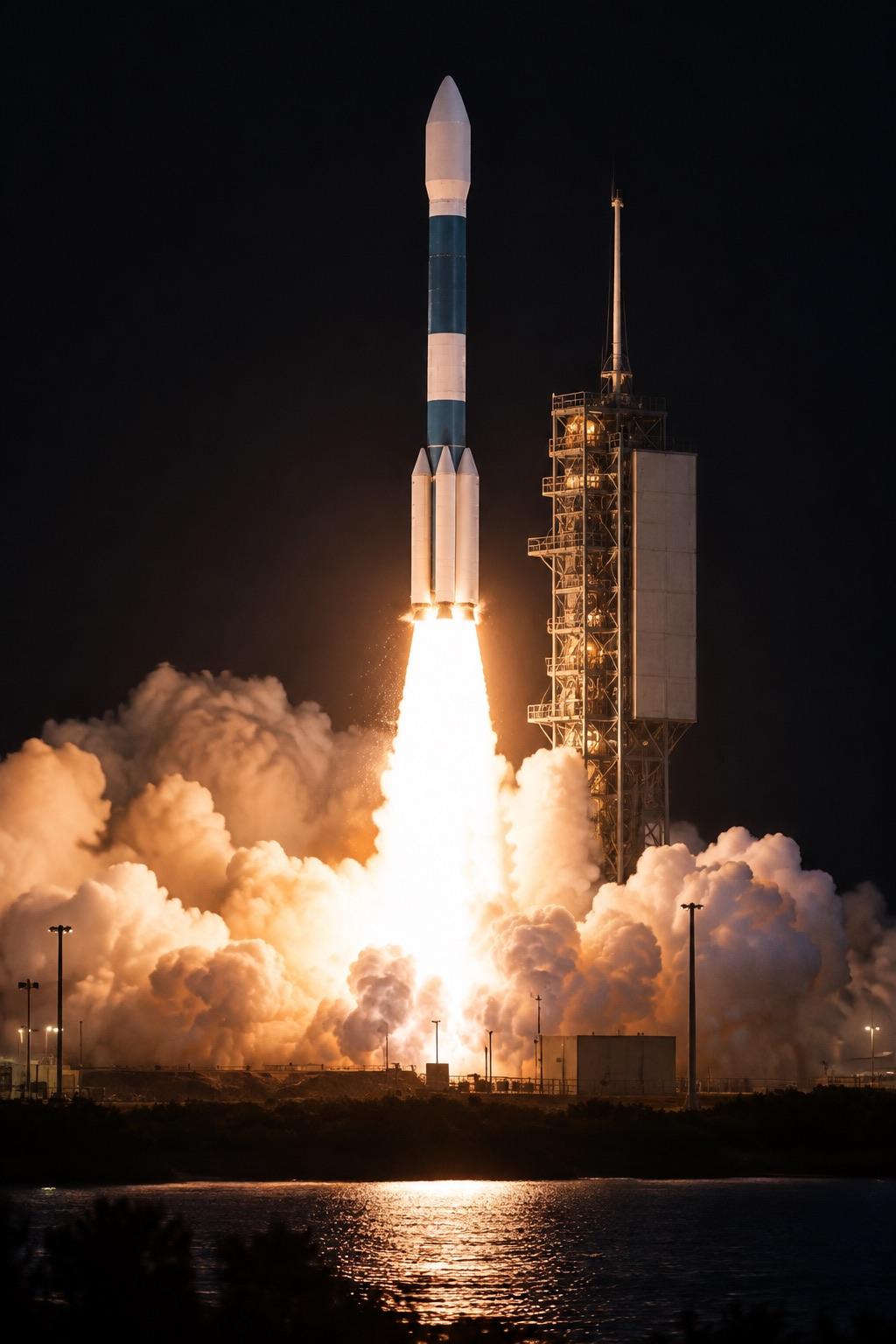
Titan IIIE-Centaur launch
20 August 1975 · Cape Canaveral LC-41
A 160-foot Titan IIIE rocket roared off Launch Complex 41 carrying the combined 3,500-kg orbiter and lander into space, beginning an 11-month voyage across 500 million kilometers of interplanetary void.
Touchdown on Chryse Planitia
20 July 1976 · 11:53:06 UTC
Aeroshell discarded, supersonic parachute deployed, and three throttleable hydrazine engines guided the 572-kg lander down into Chryse Planitia (the Golden Plain) at 2.4 m/s. It settled stably onto three aluminum footpads.
The first picture from Mars
Sol 0 · 25 seconds after landing
Just 25 seconds after engine shutdown, Camera 2's nodding mirror scanned line by line down Footpad 2. When the signal reached Pasadena 19 minutes later, scientists cheered: clear ground, fine red dust, and intact landing struts.
A red sky and volcanic plains
Sol 1 · 21 July 1976
Camera 1 scanned a 300-degree panorama across Chryse Planitia. Instead of the expected blue sky, Mars showed a butterscotch salmon atmosphere saturated with suspended airborne dust, scattered with wind-carved volcanic basalt boulders.
Scooping the soil for life
Sol 8 · 28 July 1976
The robotic collector arm extended 3 meters and dug the first robotic trenches on Mars. Soil was dumped into three automated biology chambers. When tagged nutrients were injected, radioactive carbon gas surged—sparking a 30-year debate.
Six years of daily weather reports
1976 – 1982 · 2,245 Martian Sols
While Viking 2 fell silent in 1980, Viking 1 kept working. Powered by SNAP-19 plutonium generators, it broadcast daily meteorology, seasonal dust storms, and atmospheric pressure trends across three full Martian years.
The fatal command
11 November 1982 · Sol 2245
During an antenna software update beamed from Earth to optimize battery charging, a memory pointer address collided with the high-gain antenna steering code. Viking 1 pointed its dish away from Earth, into empty space, and never answered again.
Thomas Mutch Memorial Station
HiRISE Frame PSP_001521_2025
In December 2006, the HiRISE camera on MRO spotted Viking 1 resting quietly on Chryse Planitia, its backshell, heat shield, and parachute resting within a mile. Renamed for imaging team leader Thomas Mutch, it stands as humanity's first home on the Red Planet.
The end
Thank you, Viking 1.
Sources
- NASA NSSDCA Master Record: Viking 1 Lander (1975-075C)
- NASA History SP-4212: On Mars - Exploration of the Red Planet
- HiRISE: Viking 1 Lander in Chryse Planitia (PSP_001521_2025)
Every photo is from NASA's public archive and credited on screen; the cruise and silence scenes are drawn, and the bouncing path is an illustration, not to scale. NASA does not endorse this site.