Viking 2: the story
Viking 2
NASA Project Viking · 1975 – 1980
While Viking 1 landed on the equatorial plains, Viking 2 was sent far north to Utopia Planitia, where scientists hoped subsurface ice would reveal active signs of water and life.
The backup that flew second
9 September 1975 · LC-41
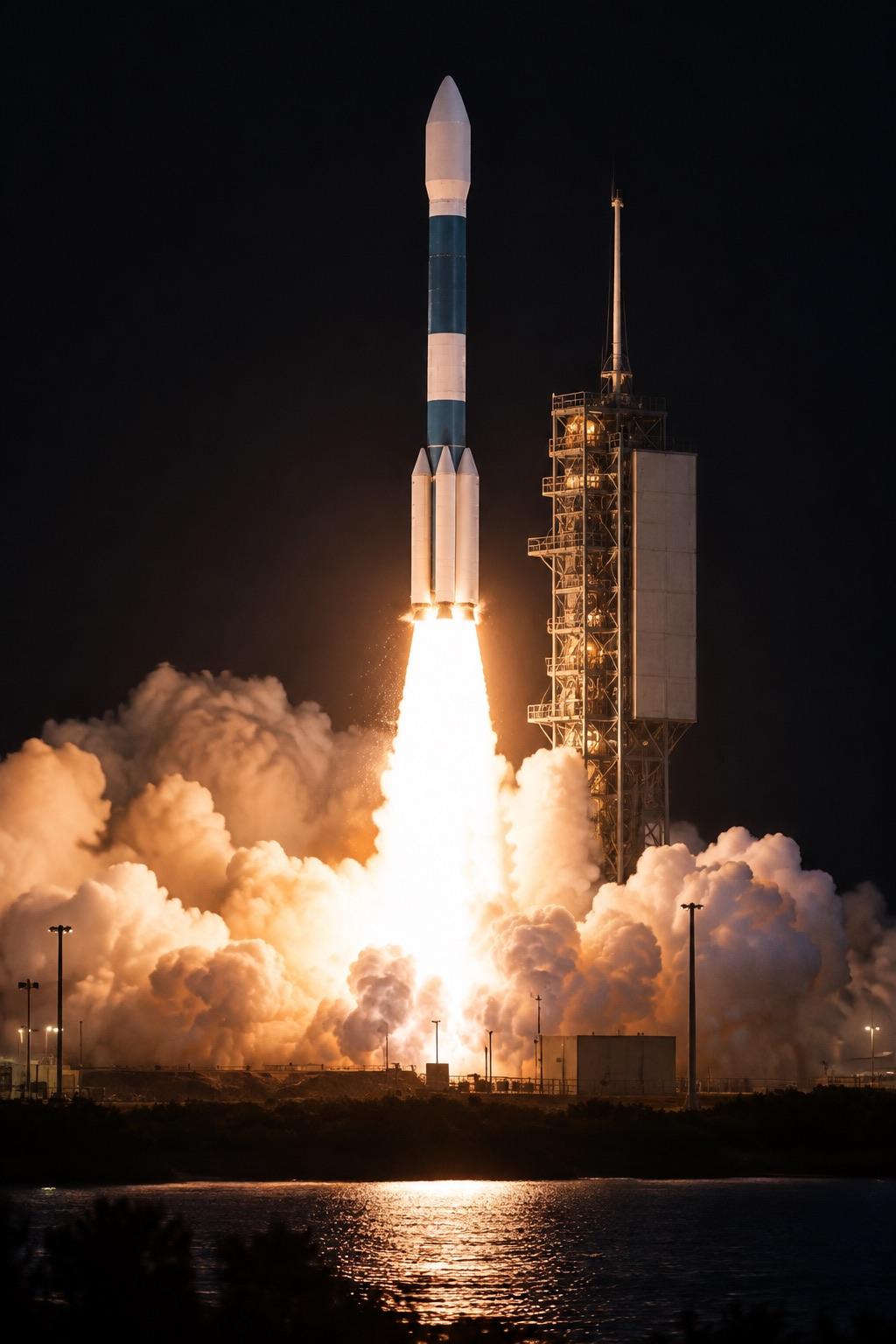
Originally scheduled to fly first as Viking A, a battery defect caused engineers to swap it for Viking B. Re-designated Viking 2, it launched 20 days later into a sweeping interplanetary orbit.
The 8.5-degree westward tilt
3 September 1976 · 22:37:50 UTC
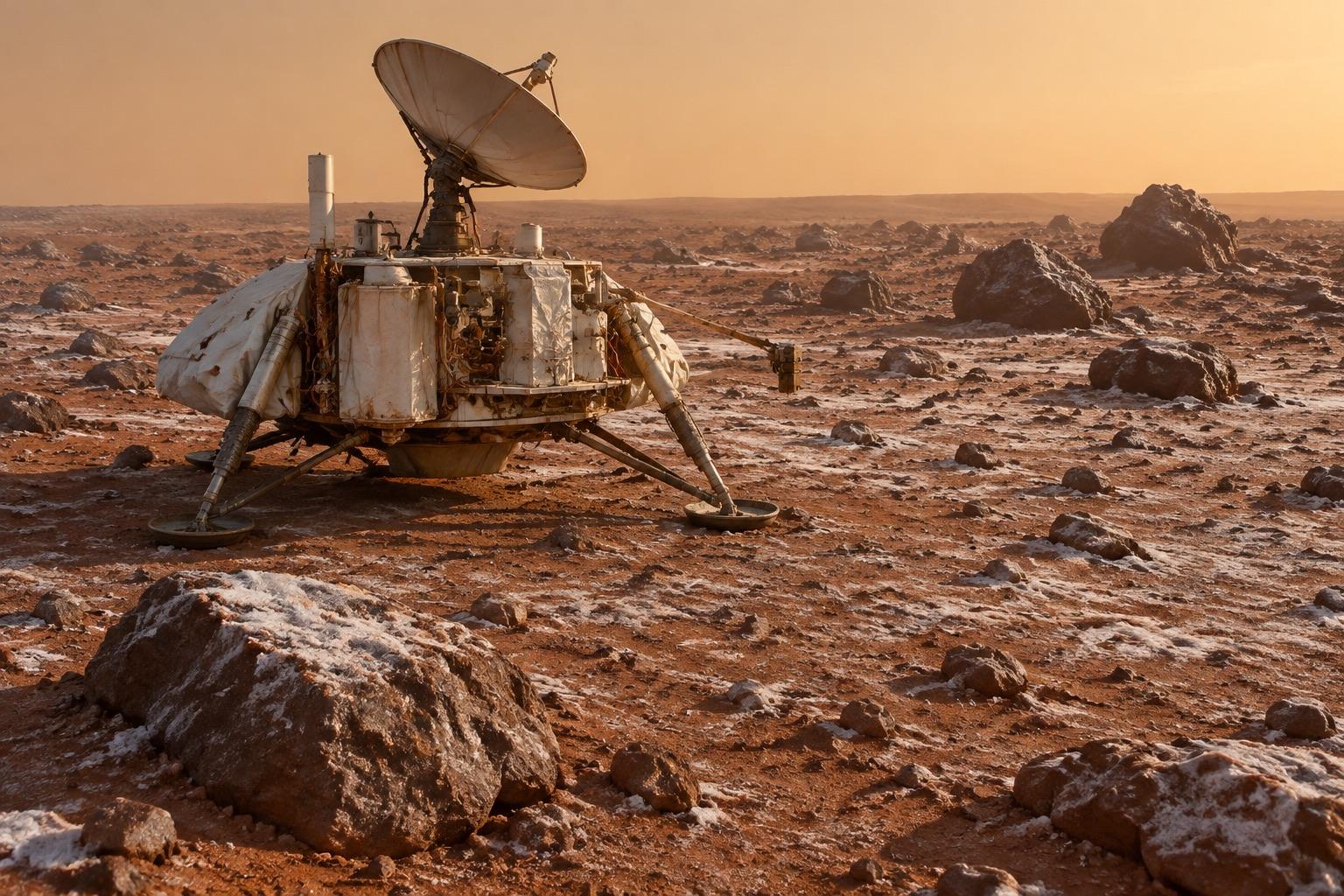
Touchdown was rougher than its twin's: one of the lander's footpads landed directly atop a volcanic rock, causing the entire lander to sit at a permanent 8.5° westward tilt in Utopia Planitia.
The Sol 80 Marsquake
Sol 80 · 23 November 1976
While Viking 1's seismometer uncaging pin jammed and never worked, Viking 2's seismometer functioned on the lander body. On Sol 80, during a quiet wind lull, it recorded an event consistent with a magnitude 2.8 marsquake.
Water frost on the rocks
May 1977 · Sol 260 Northern Winter
As northern winter plunged temperatures to -120°C, Camera 2 photographed a delicate white dusting of water-ice frost coating the red basalt rocks—the first visual confirmation of Martian surface ice.
Winter darkness & battery drain
11 April 1980 · Sol 1281
After 1,281 Martian sols (nearly four Earth years), Viking 2's nickel-cadmium batteries degraded under harsh winter cold. Telemetry ceased on April 11, 1980, leaving the tilted lander silent in Utopia.
Found in Utopia Planitia
HiRISE Frame PSP_001501_2280
Thirty years later, the HiRISE camera pinpointed Viking 2 at 47.668° N, 134.280° E, identifying the bright lander deck, parachute, and heat shield impact site scattered across the ancient northern lowlands.
The end
Thank you, Viking 2.
Sources
- NASA NSSDCA Master Record: Viking 2 Lander (1975-083C)
- NASA History SP-4212: On Mars - Exploration of the Red Planet
- HiRISE: Viking 2 Lander in Utopia Planitia (PSP_001501_2280)
Every photo is from NASA's public archive and credited on screen; the cruise and silence scenes are drawn, and the bouncing path is an illustration, not to scale. NASA does not endorse this site.