Surveyor 1: the story
Surveyor 1
NASA Project Surveyor · 1966 – 1967
Before Apollo astronauts could walk on the Moon, NASA had to solve a frightening puzzle: was the lunar surface hard rock, or a bottomless ocean of dust that would swallow a spaceship whole?
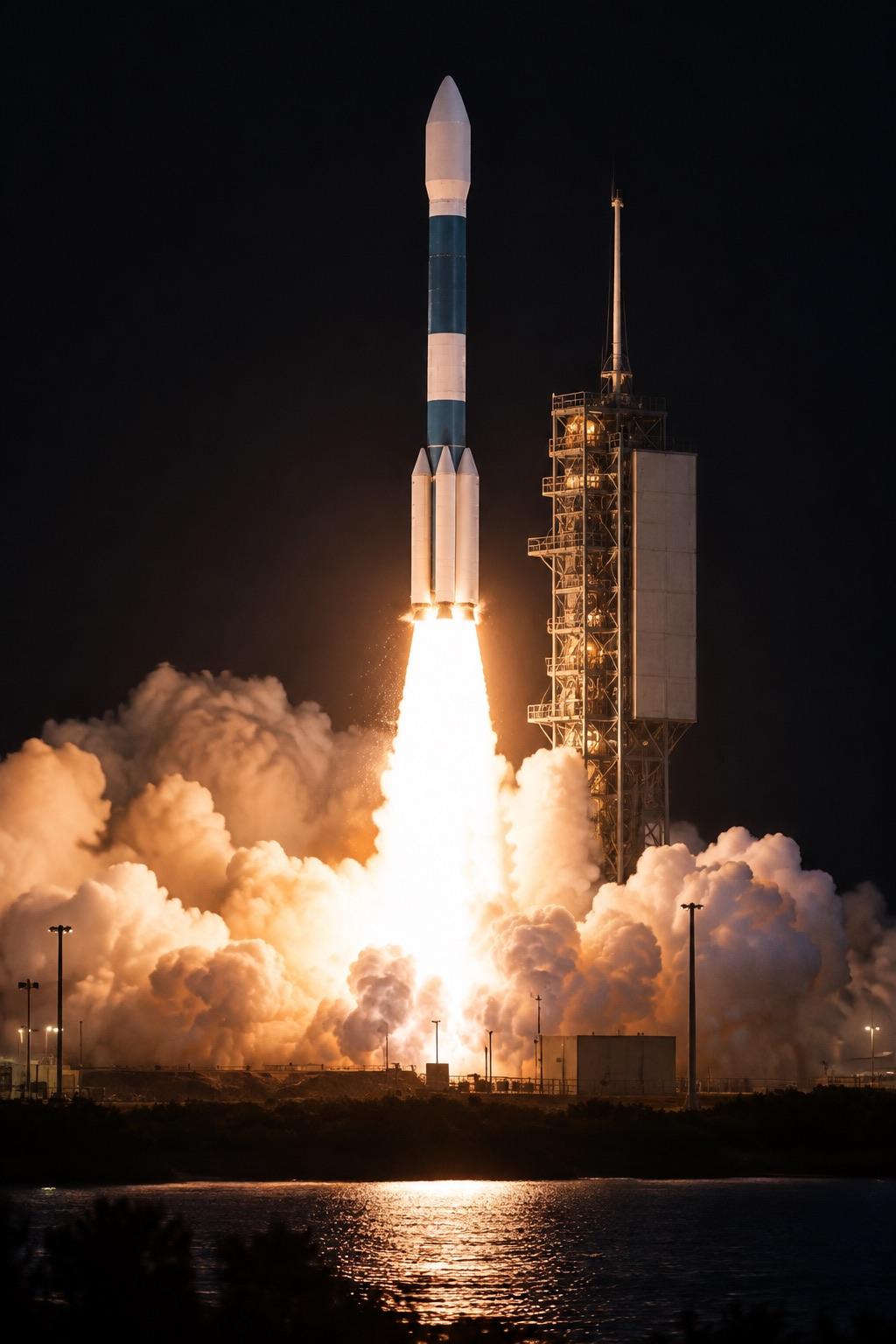
Atlas-Centaur launch
30 May 1966 · Cape Canaveral LC-36A
Surveyor 1 roared into the Florida morning sky aboard an Atlas-Centaur rocket—the very first operational test of liquid hydrogen high-energy upper stages.
Touchdown at Flamsteed P
2 June 1966 · 06:17:36 UTC
Retrorocket burned, vernier engines throttled down, and Surveyor 1 touched down in the Ocean of Storms at 3.4 m/s. Its shock-absorbing landing gear bounced 5 cm into the air before resting permanently.
3.5 centimeters into the dust
Day 1 · 2 June 1966
The TV camera pointed down at Footpad 2. The aluminum honeycomb pad had crushed just 3.5 centimeters into the lunar regolith. The Moon had a solid bearing capacity of 40 kPa. Apollo was safe to land.
Surviving the -150°C night
14 June – 6 July 1966
The sun sank below the lunar horizon, plunging Surveyor into 14 continuous days of sub-zero darkness. When the sun finally rose again on July 6, the frozen solar cells warmed, and the lander woke back up to send 618 more photos.
Silent in the Ocean of Storms
LROC Frame M175357472R
Today, Surveyor 1 still stands on its three landing pads in Flamsteed P. Photographed from 50 km orbit by the Lunar Reconnaissance Orbiter, its triangular shadow marks humanity's first peaceful foothold on the lunar frontier.

The end
Thank you, Surveyor 1.
Sources
- NASA NSSDCA Master Record: Surveyor 1 (1966-045A)
- NASA SP-126: Surveyor I - A Preliminary Report
- LROC: Surveyor 1 at Flamsteed P (M175357472R)
Every photo is from NASA's public archive and credited on screen; the cruise and silence scenes are drawn, and the bouncing path is an illustration, not to scale. NASA does not endorse this site.