Spirit: the story
Spirit
Mars Exploration Rover A · 2003 – 2010
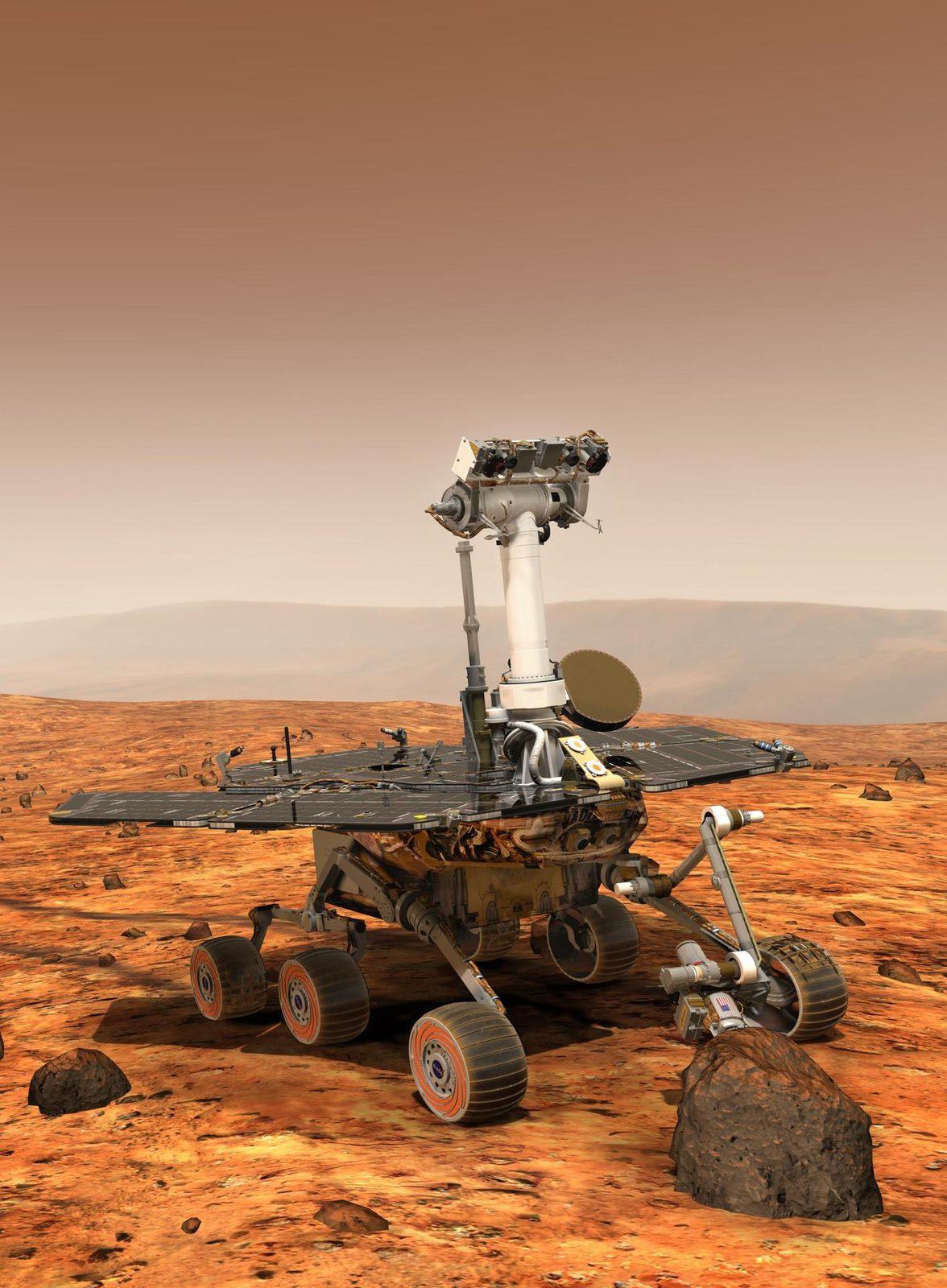
Built to survive 90 Martian days and drive 1,000 meters. Spirit worked for six years, climbed 82 meters up a mountain, and turned an engineering catastrophe into one of the greatest discoveries in planetary science.
Follow the water
Why it was built
NASA dispatched twin robotic geologists to opposite hemispheres of Mars. Spirit was targeted to Gusev Crater—a massive 166-kilometer impact basin with an ancient dry riverbed that appeared to have once held a lake.
Forged from ground zero
Lower Manhattan, 2001–2002
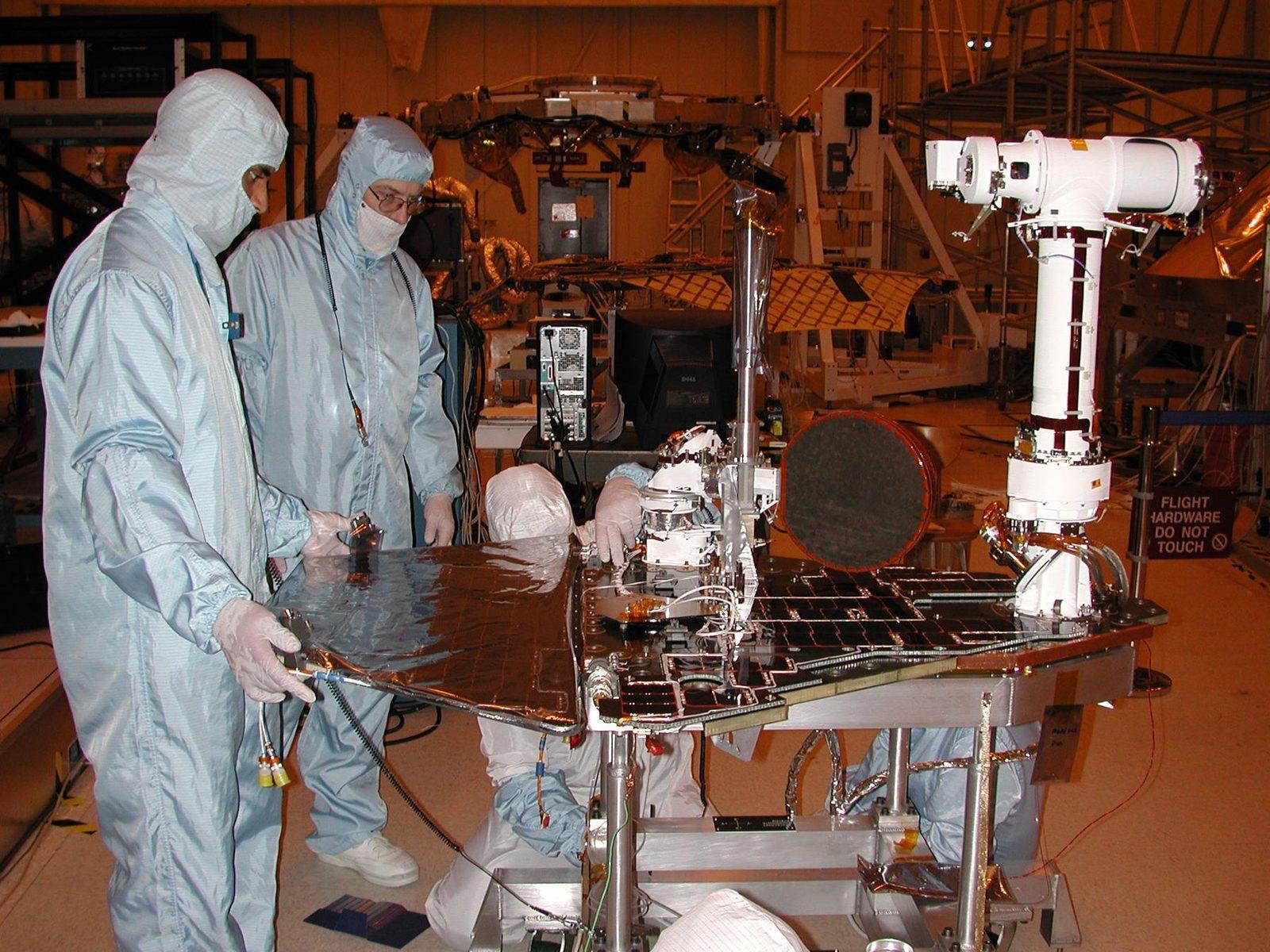
Engineers at Honeybee Robotics in New York City machined the cable-shield cuff on Spirit's Rock Abrasion Tool from recovered World Trade Center aluminum, laser-etching a tiny American flag to endure on Mars forever.
Liftoff from Space Coast
10 June 2003 · 17:58 UTC
A Boeing Delta II 7925 rocket blasted off Launch Complex 17-A at Cape Canaveral, vaulting Spirit into interplanetary trajectory toward the Red Planet.
Seven months across the void
June 2003 – January 2004
Spirit traveled 487 million kilometers through deep space. Jettisoning its cruise stage 15 minutes before entry, it plunged into the Martian atmosphere at 19,000 km/h.
Twenty-eight bounces
4 January 2004 · 04:35 UTC
Cocooned inside 24 high-strength Vectran airbags, Spirit slammed onto the rocky plains of Gusev Crater, bouncing 28 times before settling into its lander petals.
The dream is alive
Columbia Memorial Station
NASA dedicated the landing site to the lost crew of Space Shuttle Columbia. An aluminum plaque was mounted to the high-gain antenna, and the seven peaks on the horizon were named the Columbia Hills.
Summit of a mountain
Husband Hill · 2005
Spirit climbed 82 meters up Husband Hill. In March 2005, Martian dust devils swept across the rover, blowing off accumulated dust and boosting its solar panel output from 60% back up to 93%.
A paralyzed wheel
Sol 779 · March 2006
Spirit's right-front drive motor seized completely. Unable to turn the wheel, engineers commanded Spirit to drive backward, dragging the dead wheel across the soil like an anchor.
Accidental breakthrough
Gertrude Weise · Sol 1157
As the frozen wheel carved a 10-centimeter deep trench through the red dust, it flipped up brilliant white soil. APXS analyzed the trench: 90.1% pure amorphous silica, formed only by ancient volcanic hot springs or steam vents.
The sand trap at Troy
May 2009 · Sol 1892
Driving beside Home Plate, Spirit broke through a crusty surface veneer into an invisible trap of soft ferric sulfate sand. Despite months of extrication tests, all five remaining wheels spun in place.
The final winter
22 March 2010 · Sol 2210
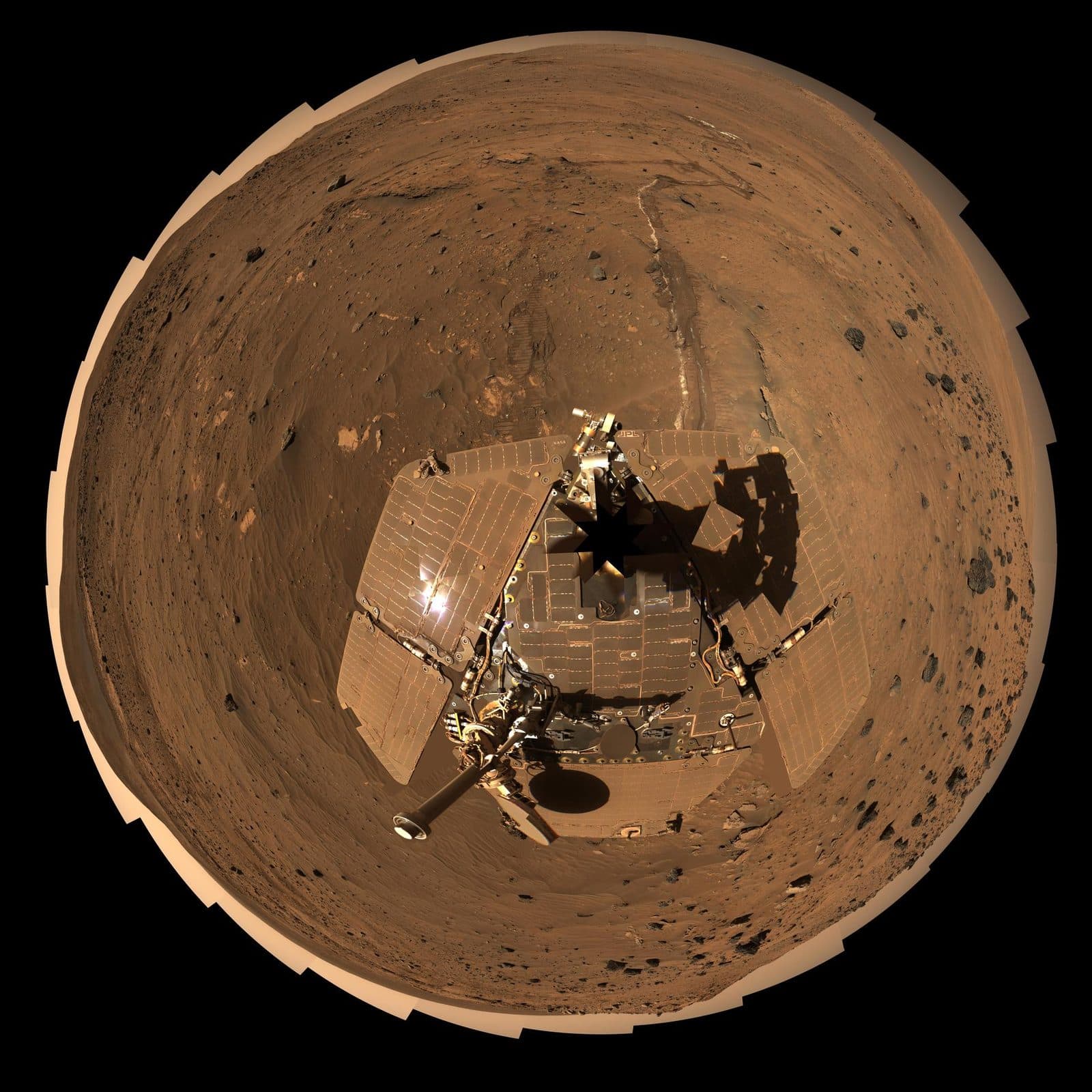
Trapped with an 11.5-degree southward tilt, Spirit could not aim its solar panels toward the low northern winter Sun. After Sol 2210, its internal batteries drained, freezing its survival heaters.
A permanent landmark
May 2011
NASA beamed over 1,300 recovery commands before formally concluding operations. Planned for 90 sols, Spirit endured for 2,210 sols, completing 7,730 meters of exploration.
The end
Thank you, Spirit.
Sources
- NASA NSSDCA Master Spacecraft: Spirit (2003-027A)
- NASA Science Mission: Spirit
- PDS Geosciences Node MER Data Set Directory
- HiRISE: Spirit Rover at Troy beside Home Plate (ESP_021925_1650)
Every photo is from NASA's public archive and credited on screen; the cruise and silence scenes are drawn, and the bouncing path is an illustration, not to scale. NASA does not endorse this site.