LCROSS: the story
LCROSS
NASA LCROSS Mission · 2009
At the Moon's South Pole lie craters where sunlight hasn't touched for over two billion years. At 40 Kelvin (-233°C), these craters are the coldest places in the entire solar system—and giant natural iceboxes.
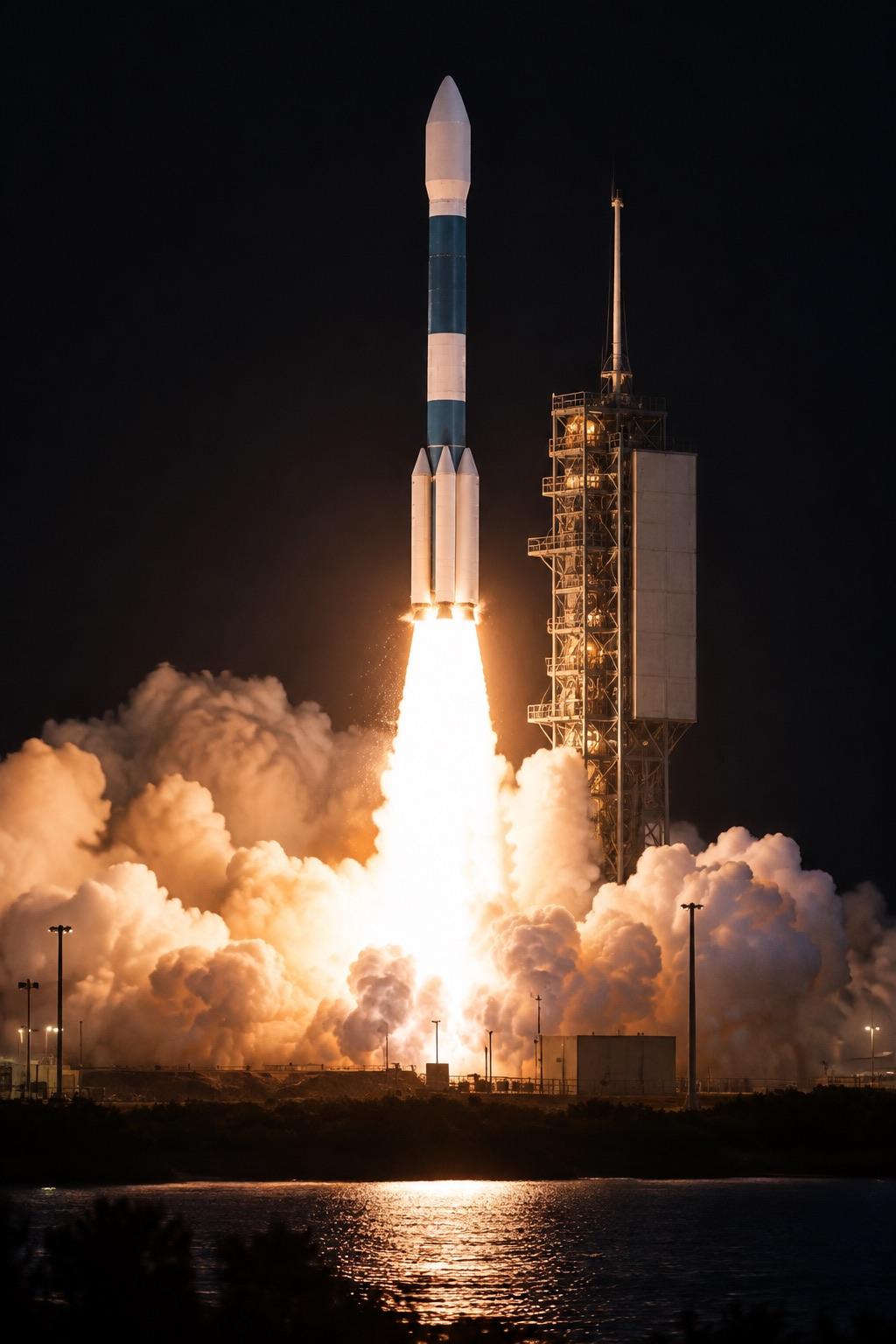
Atlas V launch with LRO
18 June 2009 · Cape Canaveral SLC-41
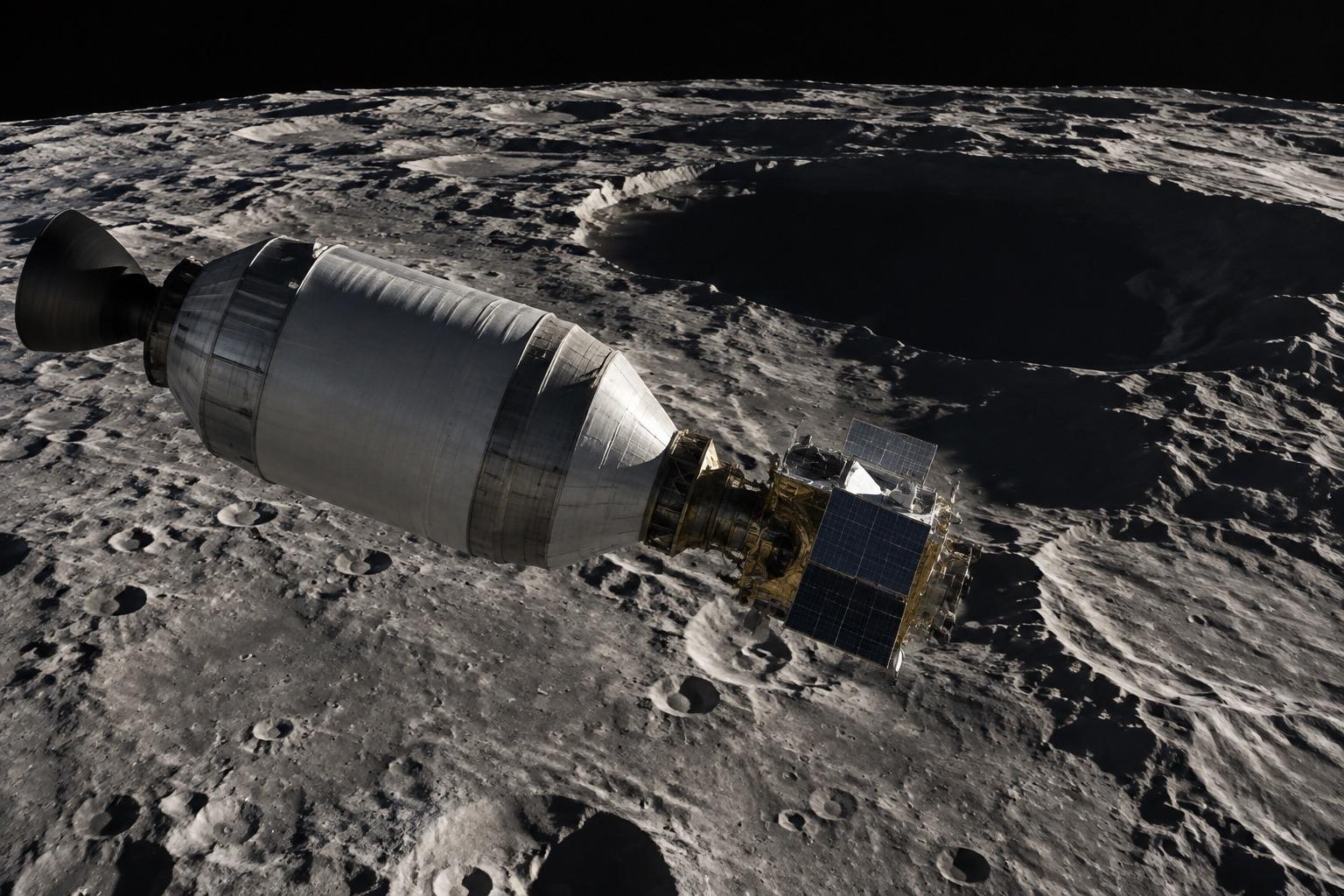
Launched alongside the Lunar Reconnaissance Orbiter (LRO), LCROSS stayed attached to its massive Centaur rocket upper stage, swinging past the Moon to enter a 3-month polar cruise orbit.
The 7.2 GJ kinetic explosion
9 October 2009 · 11:31:19 UTC
The 2,305 kg Centaur rocket hit the frozen floor of Cabeus crater at 2.5 km/s (9,000 km/h). Unleashing 7.2 GigaJoules of kinetic energy, it blasted a 20-meter crater and threw 350 tons of regolith into the sunlight.
Flying through the water plume
T + 4 minutes · 11:35 UTC
Trailing 4 minutes behind, the Shepherding Spacecraft flew directly through the sunlit ejecta plume. Its infrared spectrometers caught distinct absorption dips at 1.4 µm and 1.9 µm—the unmistakable molecular fingerprint of water.
Water on the Moon
155 kilograms of water ice
LCROSS measured 155 kilograms of pure water vapor and ice—about 5.6% of the excavated soil. Along with water, it found methane, ammonia, and hydrogen: a primordial cocktail left by billions of years of comets.
Resting in Cabeus Crater
LROC Frame M119827295RE
Moments after sending its final spectra, the Shepherding Spacecraft joined the Centaur on the dark floor of Cabeus crater. Their twin impact craters remain preserved forever in eternal shadow.
The end
Thank you, LCROSS.
Sources
- NASA NSSDCA Master Record: LCROSS (2009-031B)
- Science Magazine: Detection of Water in the LCROSS Ejecta Plume
- LROC: LCROSS Impact Site in Cabeus (M119827295RE)
Every photo is from NASA's public archive and credited on screen; the cruise and silence scenes are drawn, and the bouncing path is an illustration, not to scale. NASA does not endorse this site.