
Skip to page content

Meet LCROSS

Every part, up close

Turn it, pick a part to see what it did, pull the parts apart, or download it to print your own.

CAPE CANAVERAL, Fla.
Drag to turn · pinch or scroll to zoom

Parts

Download

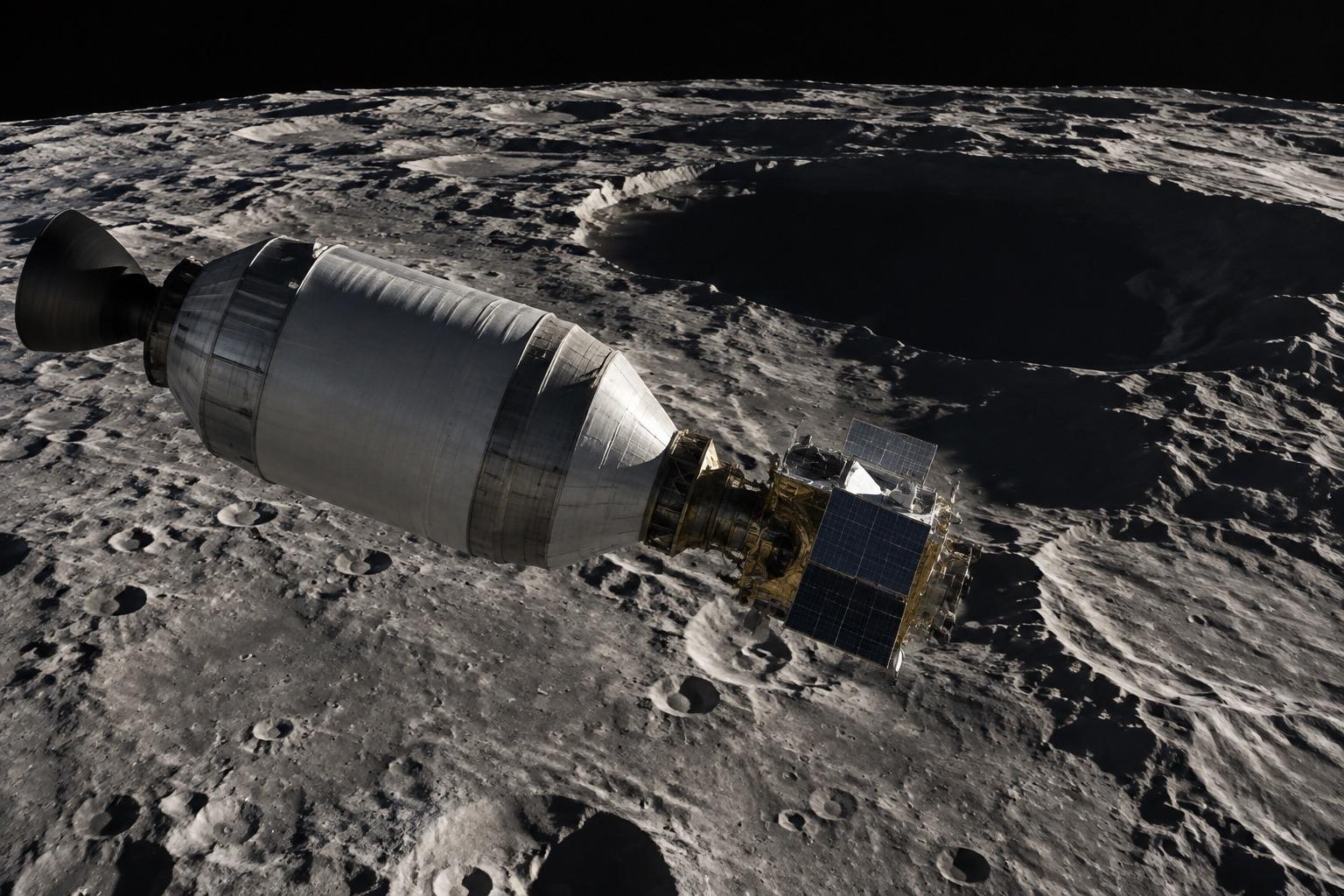
NASA has not published a 3D model of LCROSS, so this is a simplified model made for this site from NASA photos and descriptions. Shapes and parts follow the real machine; sizes are approximate.

The film · 6 scenes

Slammed into the permanent shadows of the lunar South Pole at 9,000 km/h. Its 10-km dust plume proved pure water ice was hiding on the Moon.

From why it was built to its last signal, told in real NASA photographs. Scroll through it, or press play.

Watch the film

Impact day, 9 October 2009

Two impacts, four minutes apart. Times in UT.

  1. 01:50The Centaur stage and LCROSS separate.
  2. 11:31The Centaur hits Cabeus crater, throwing up about 350 tonnes of lunar material.
  3. +90 sThe Lunar Reconnaissance Orbiter flies over and observes the impact point in infrared.
  4. 11:36LCROSS, having flown through the plume, hits the Moon at about 9,000 km/h.
  5. 13 NovNASA announces that the data shows water near the Moon's south pole.

Interactive Mission Simulation

LCROSS: 7.2 GJ Kinetic Water Plume

Simulate the Centaur impact into Cabeus Crater and detect water ice vapor.

Play Simulation

Fly along

Follow LCROSS's real path in NASA's Eyes on the Solar System, built from spacecraft navigation data.

NASA/JPL-Caltech · open full screen

Life’s work

They went where we couldn’t.

  1. CAPE CANAVERAL, Fla.No. 01

    Arrival in Florida

    February 2009

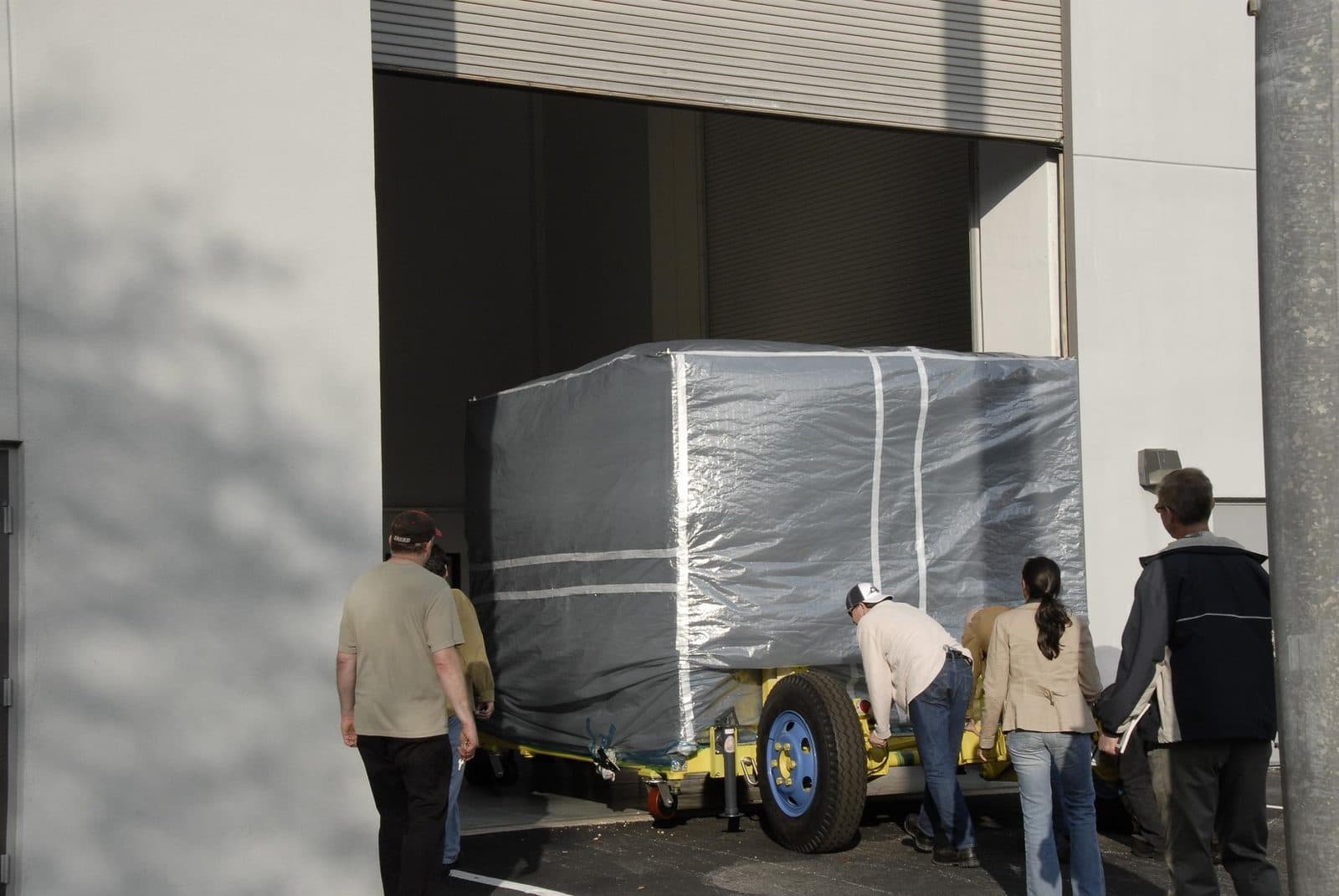
    LCROSS arrived at Astrotech in Florida from Northrop Grumman in Redondo Beach, California.

  2. CAPE CANAVERAL, Fla.No. 02

    Stacked with LRO

    May 2009

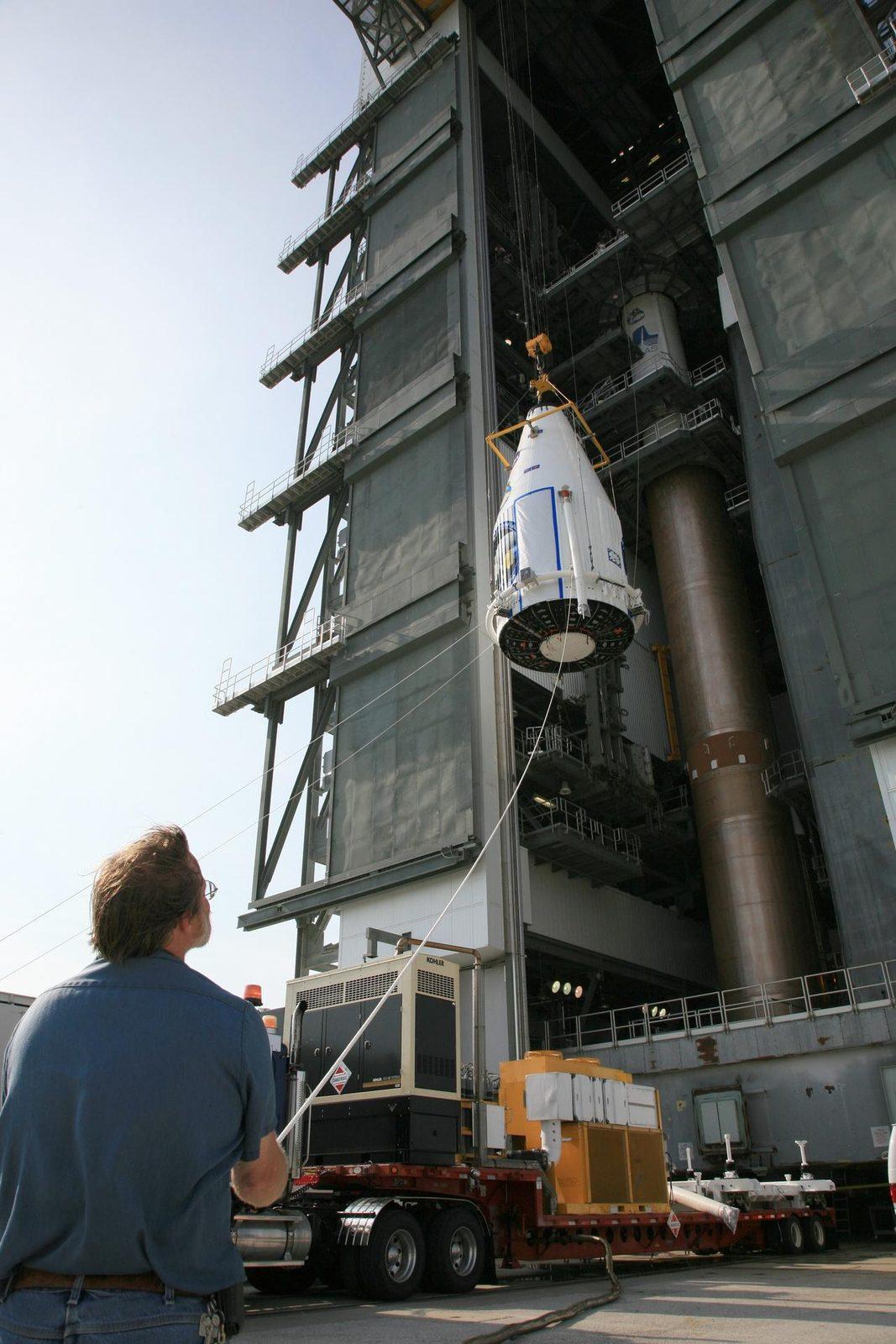
    LRO and LCROSS were lifted into the tower at Launch Complex 41.

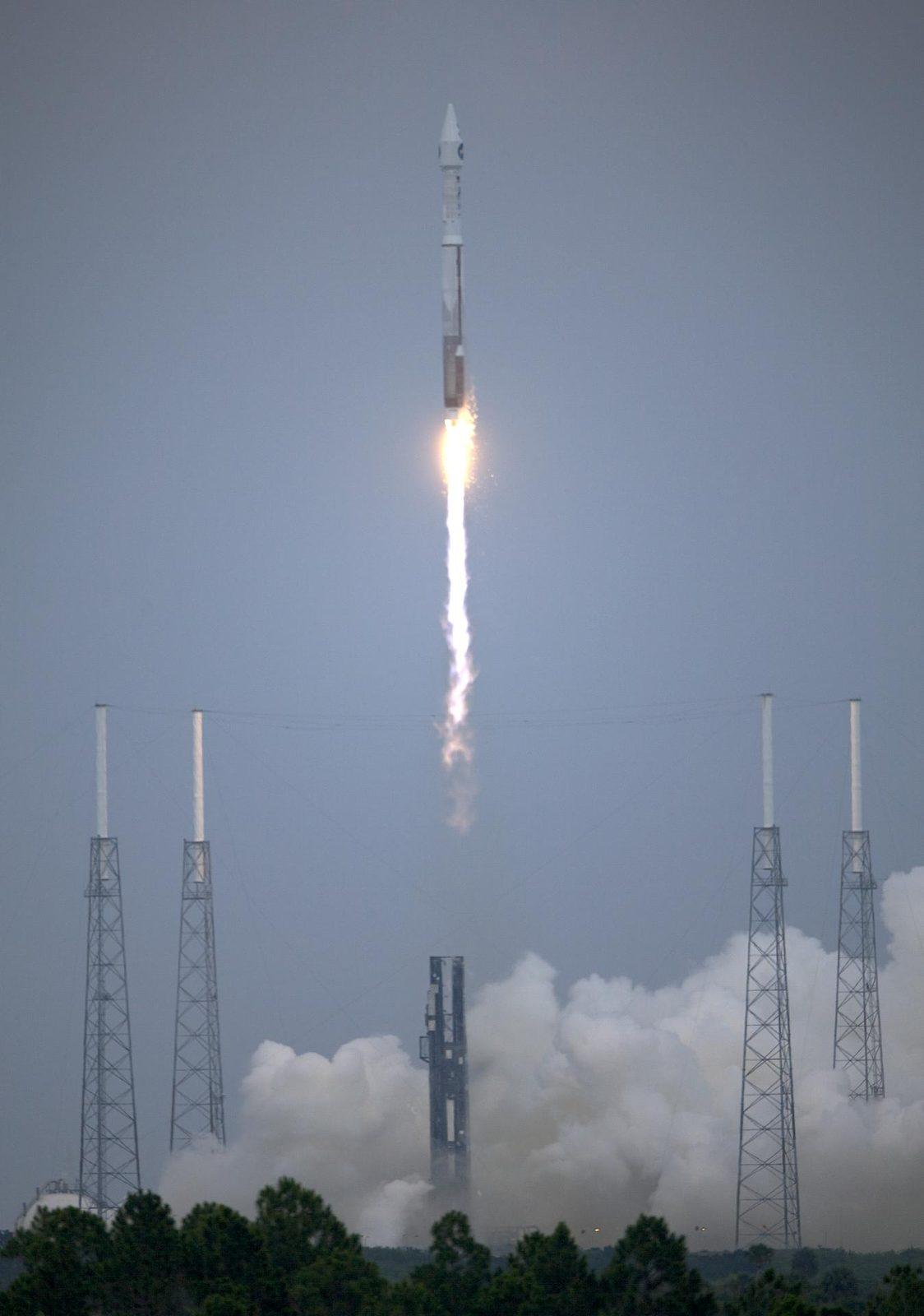
  3. The Lunar Reconnaissance Orbiter and Lunar Crater Observation and Sensing Satellite are bound for the moon after a flawless liftoff Thursday, June 18, 2009, from Cape Canaveral Air Force Station in Florida aboard an AtlaNo. 03

    Liftoff

    18 June 2009

    They launched together on an Atlas V at 21:32 UT.

  4. A fuel scare (AI-generated placeholder)No. 04AI placeholder

    A fuel scare

    August 2009

    A sensor problem burned 140 kg of propellant, more than half of what was left. The mission still had enough.

  5. Water (AI-generated placeholder)No. 05AI placeholder

    Water

    13 November 2009

    NASA announced that LCROSS data showed water near the Moon's south pole.

Flown into the surface

Impact

09.10.2009

The Centaur stage struck Cabeus crater first. LCROSS followed four minutes later, sending data until the moment it hit.

Born on Earth

Launch

The Lunar Reconnaissance Orbiter and Lunar Crater Observation and Sensing Satellite are bound for the moon after a flawless liftoff Thursday, June 18, 2009, from Cape Canaveral Air Force Station in Florida aboard an Atla
LRO and LCROSS lift off, 18 June 2009 · NASA/Bill Ingalls

18 June 2009
Atlas V 401 · Space Launch Complex 41

Built by Northrop Grumman.

Before launch

Built

CAPE CANAVERAL, Fla.
LCROSS arrives in Florida from Northrop Grumman · NASA/Kim Shiflett

LCROSS steered its spent rocket stage into a dark polar crater, flew through the plume and found water.

The full story

LCROSS, from start to finish

LCROSS, the Lunar Crater Observation and Sensing Satellite, was built to find out whether water ice exists in a permanently shadowed crater at the Moon's south pole. On 9 October 2009 it crashed its spent rocket stage into Cabeus crater, flew through the plume, and then hit the Moon itself. Its data showed water.

Why it was built

Like the Lunar Reconnaissance Orbiter it launched with, LCROSS was meant to confirm water ice in a permanently shadowed crater at the lunar south pole, and to test new modular subsystems for future missions. Both were part of NASA's Lunar Precursor Robotic Program and were first funded under the Constellation program to return people to the Moon.

The plan was unusual: crash the rocket's Centaur upper stage into the crater, fly LCROSS through the debris plume about four minutes later to measure it, then let LCROSS hit the Moon too.

A long way round

LCROSS and LRO launched together on 18 June 2009. After LRO separated, the Centaur and LCROSS stayed joined, swung past the Moon on 23 June and entered a looping Earth orbit with a period of 37 days, passing near the Moon on 10 July, 16 August and 22 September before their path met the Moon on 9 October.

On 22 August controllers found that a sensor problem had made the spacecraft burn through 140 kg of propellant, more than half of what remained. The mission could still be done, but with very little margin.

Two impacts

The Centaur and LCROSS separated at 01:50 UT on 9 October 2009. At 11:31 UT the Centaur hit Cabeus crater, excavating roughly 350 tonnes of lunar material and leaving a crater about 20 m across. Four minutes later LCROSS flew through the plume, collecting data, and struck the Moon at 11:36 UT at about 9,000 km/h. LRO watched the Centaur's impact point in infrared about 90 seconds after the crash.

Water

On 13 November 2009 NASA announced that LCROSS data "indicates that the mission successfully uncovered water … near the Moon's south pole." On 21 October 2010 scientists added that the soil in Cabeus was rich in useful materials, including mercury, magnesium, calcium, silver and sodium, that the Moon is chemically active and has a water cycle, and that in some places the water is pure ice crystals.

Watch

Official films and footage from NASA, JPL and museum archives.

In the news

Articles, image releases and history pieces from NASA.

Tribute wall

Checking authentication…

Messages from explorers (0)

  • No messages yet. There’s room for your little thank-you.

The shared RoverVilla wall stays here on Earth. These messages are not transmitted to a spacecraft.

Explore further

Official mission pages, catalogues, photo archives and 3D files.

AI-narrated documentary

LCROSS: in its own words

Coming soonAI-made

Coming later

An AI-narrated documentary

We have not made it yet. When it is ready it will be told in the first person by an AI voice, built only from the mission records above, and clearly labelled as AI-made.

Sources

Resting on Moon. Photos are from NASA's public archives and credited individually; anything marked AI-generated is not a real photo. The 3D model is a simplified model made for this site. Videos play from their publishers' YouTube channels. NASA does not endorse this site.