Mars Polar Lander: the story
Mars Polar Lander
NASA Mars Surveyor '98 · 1999
While Viking and Pathfinder explored the equatorial deserts, Mars Polar Lander set out for the south polar layered terrains—an ancient frozen archive of Martian climate history.
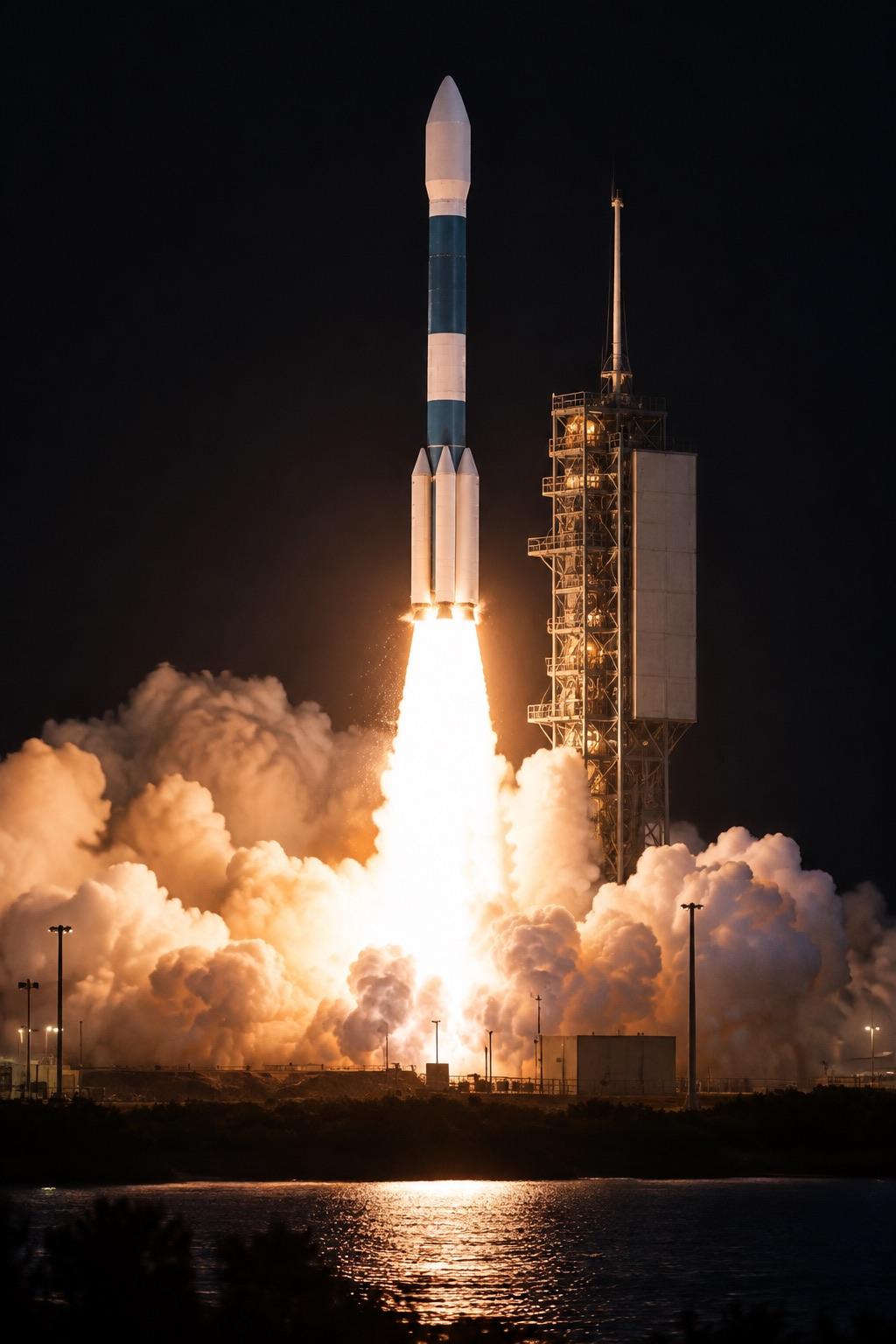
Delta II 7425 launch
3 January 1999 · Cape Canaveral SLC-17B
Launched aboard a Delta II Med-Lite rocket with two basketball-sized Deep Space 2 penetrator probes attached to its cruise stage, beginning an 11-month cruise to the Martian South Pole.
One million names on Mars
Planetary Society CD-ROM
Fastened to the lander deck was a silica CD-ROM containing the names of over 1,000,000 children and space enthusiasts from around the globe—ready to become permanent residents of Mars.
The hidden switch pulse
3 December 1999 · 20:05 UTC (1,500m Altitude)
At 1,500 meters altitude, the landing legs deployed. The extension springs snapped open with a jolt, causing the Hall-effect magnetic switches to briefly close. In the flight computer, the touchdown flag flipped to TRUE.
40 meters above the ice
3 December 1999 · 20:14 UTC (40m Altitude)
At 40 meters altitude, terminal descent logic activated to sense ground contact. It checked the flag, found TRUE, and instantly shut off all 12 descent rocket thrusters. The lander fell through the thin polar air.
Impact in the polar silence
Planum Australe · 76.05° S, 164.70° E
Accelerating under Martian gravity, the lander hit the frozen regolith at 63 km/h (17.4 m/s). Deep Space 2 penetrators Amundsen and Scott followed, impacting into the polar ice sheet.
The lessons that saved Curiosity
The Casani Board & NASA Reform
The loss transformed NASA. Rigorous end-to-end testing, real-time descent telemetry, and redundant sensor voting were mandated across the agency—laying the foundation that safely landed Spirit, Opportunity, Phoenix, Curiosity, and Perseverance.

The end
Thank you, Mars Polar Lander.
Sources
- NASA NSSDCA Master Record: Mars Polar Lander (1999-001A)
- NASA JPL Report on the Loss of the Mars Polar Lander (Casani Board)
- The Planetary Society: Voices from Earth 1-Million Names Archive
Every photo is from NASA's public archive and credited on screen; the cruise and silence scenes are drawn, and the bouncing path is an illustration, not to scale. NASA does not endorse this site.