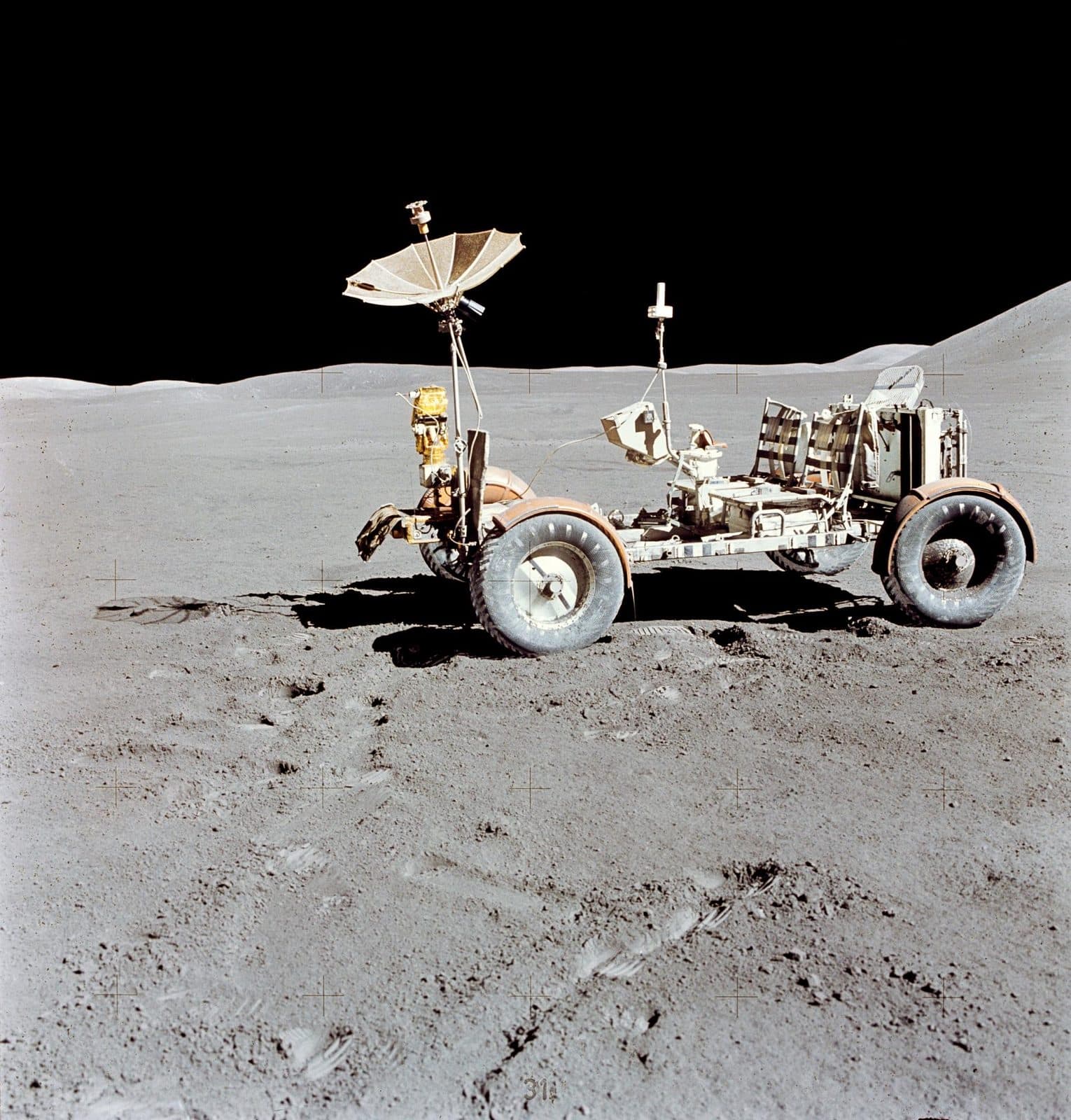
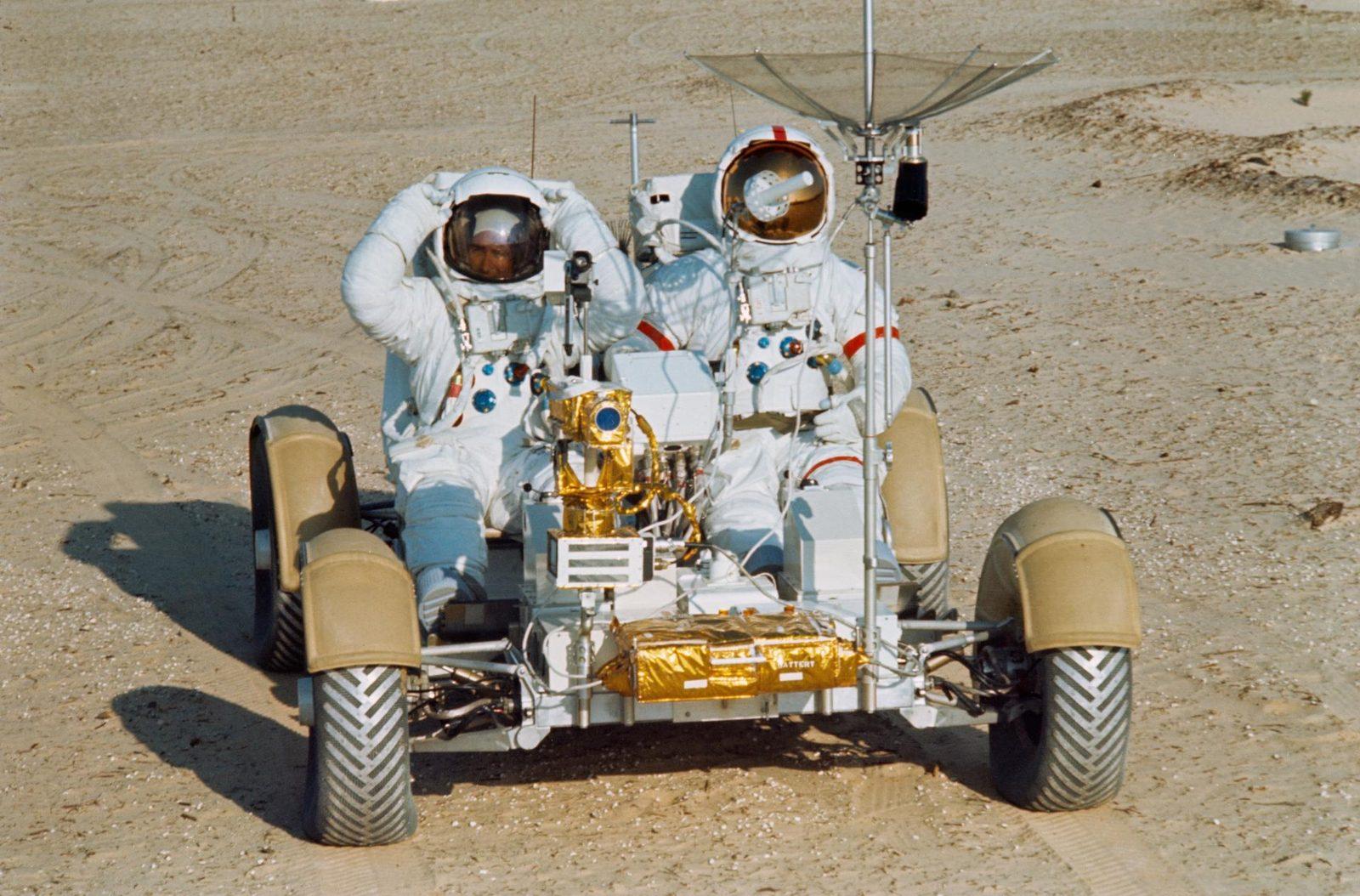
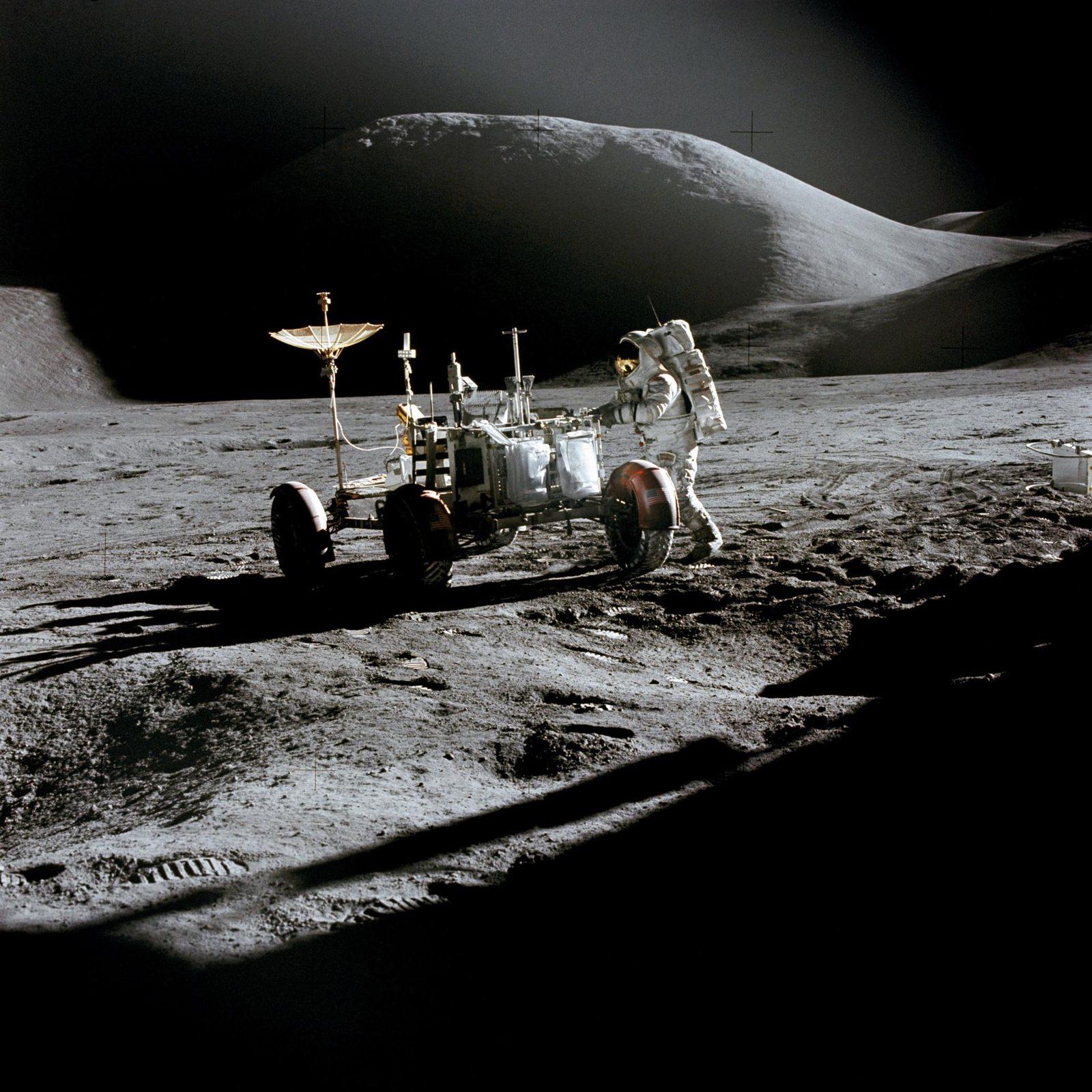
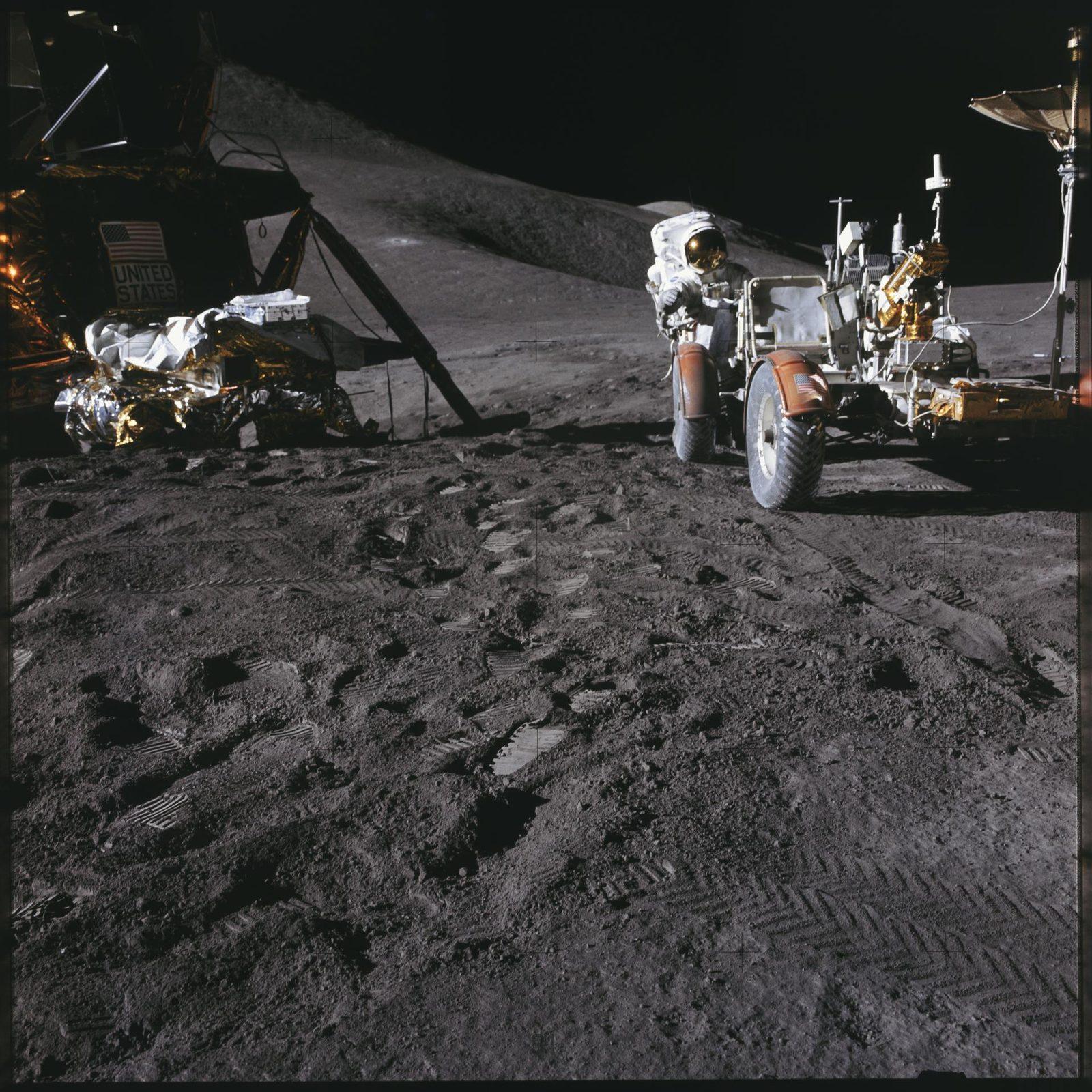
The Lunar Roving Vehicle was a lightweight, battery-powered electric car built to carry two astronauts and their equipment across the Moon. Apollo 15's rover was the first one driven on the lunar surface, in July and August 1971, and it was left parked at Hadley–Apennine.
Why it was built
On the early Apollo landings astronauts could only walk short distances from the lander; on Apollo 11 the total was a little over half a mile. A rover would let a crew carry tools and samples several miles from the landing site and reach much more varied geology. An LRV was used on each of the last three missions, Apollo 15, 16 and 17.
The rover was developed under NASA's Marshall Space Flight Center and built by Boeing.
Three drives at Hadley
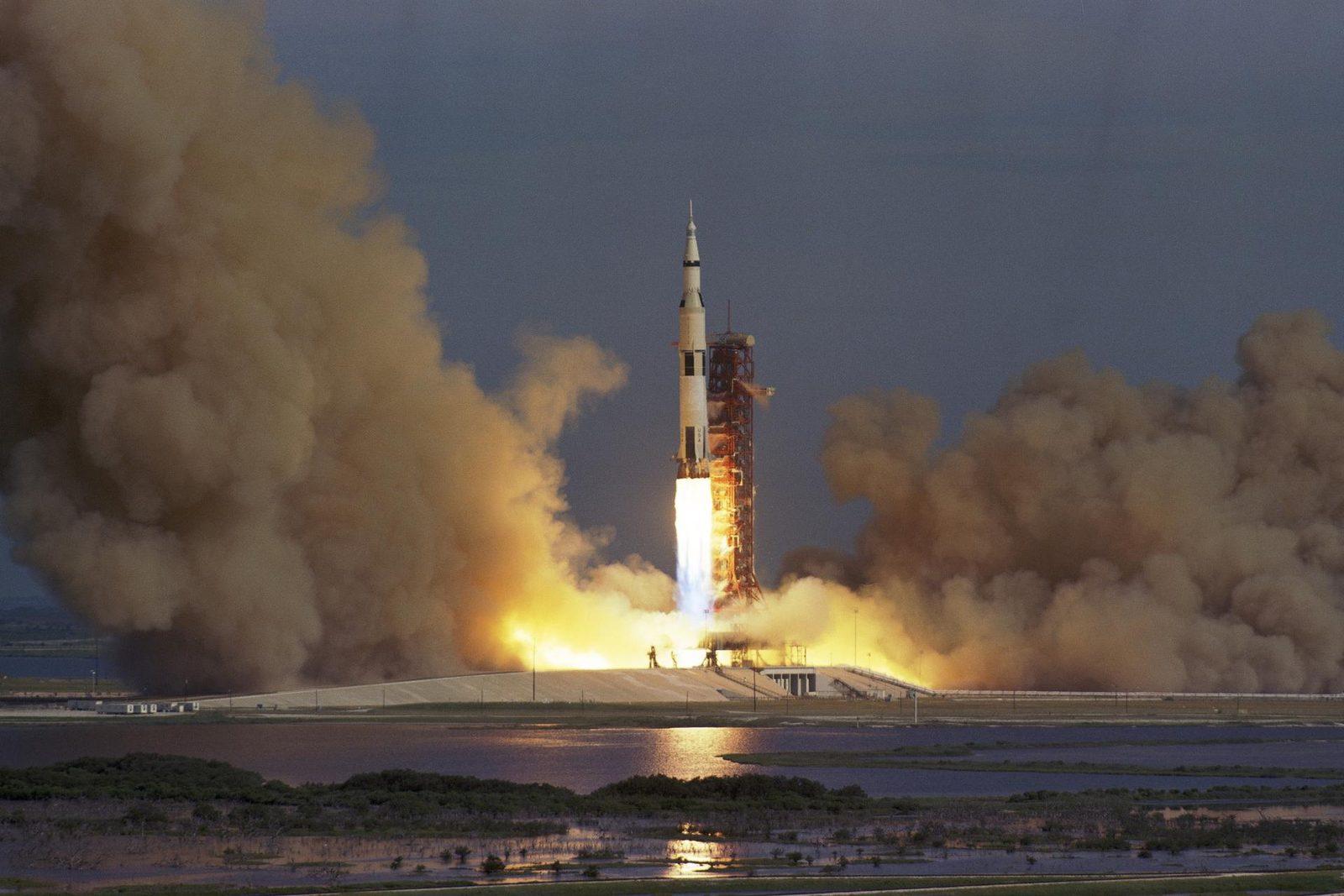
Apollo 15 launched on 26 July 1971 with David Scott, Alfred Worden and James Irwin. Scott and Irwin landed the lunar module Falcon at Hadley–Apennine, between the Apennine mountains and Hadley Rille, while Worden stayed in lunar orbit.
They deployed the rover on 31 July. Its only problem was that the front steering briefly did not work, so the first drive used rear-wheel steering only; it worked again the next day. On that first moonwalk they parked it on the edge of Hadley Rille. During their 67-hour stay they made three trips beyond the landing site, about 17.5 miles (28 km) in all, with three hours and two minutes of driving.
The last broadcast
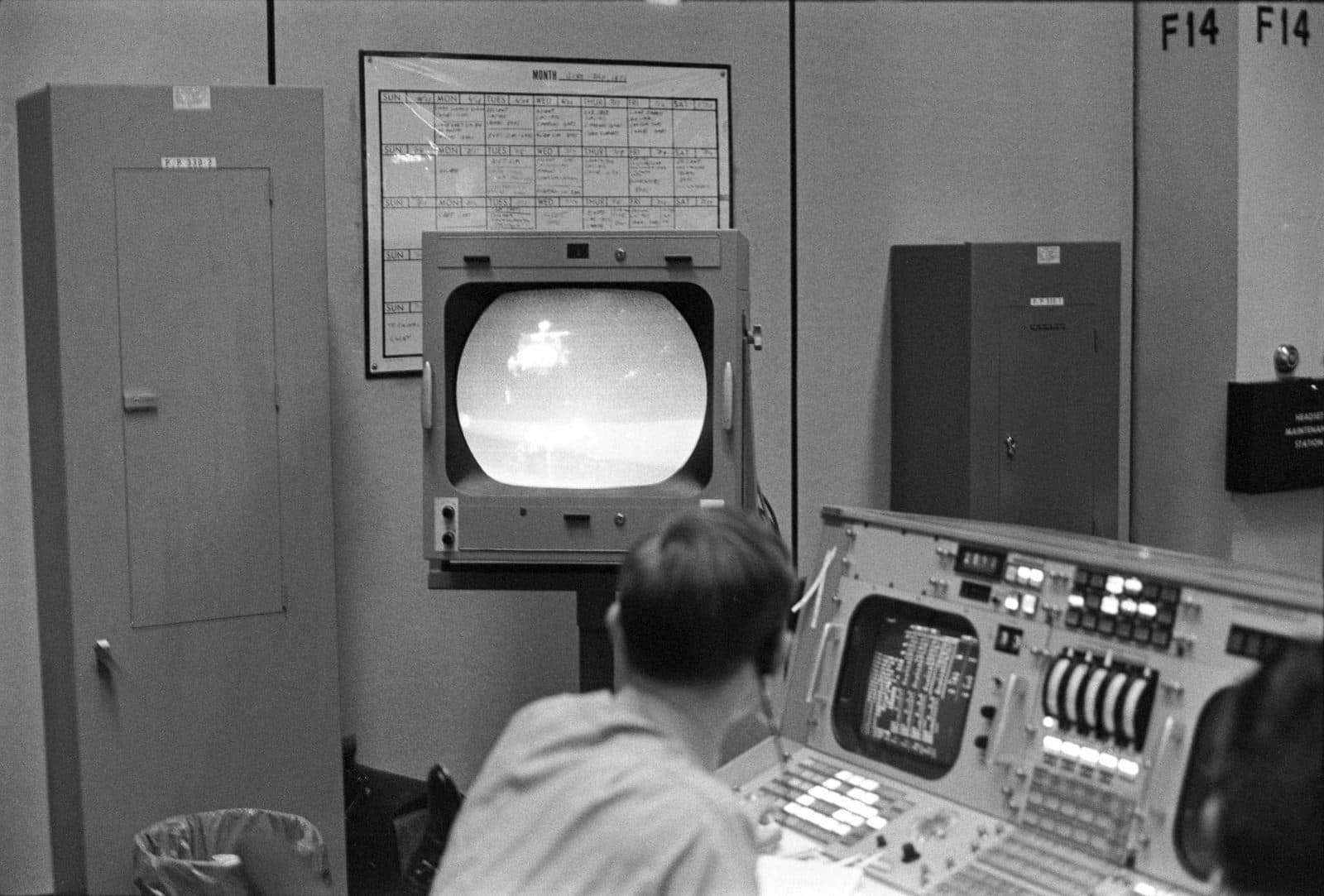
When the crew left on 2 August 1971, the rover was parked away from the lander so its colour television camera, controlled from Earth, could show Mission Control the liftoff of Falcon's ascent stage. Then it stayed behind on the Moon.
Legacy
With rovers, the distance Apollo astronauts covered grew from a little over half a mile on Apollo 11 to nearly 22.5 miles on Apollo 17. NASA is now reviving the idea for Artemis with a Lunar Terrain Vehicle.